
Artisan Ceramic Tableware
Hand-Built Sejnane Pottery by Chmissa
Four functional bowls and plates made for individual meals, shared dishes, and tables assembled over time.
This artisan ceramic tableware collection brings together four forms made by Chmissa in Sejnane: the Zerka Plate, Zephyr Bowl, Storka Bowl, and Hout Plate.
Each piece is built and marked by hand. Rather than repeating one object at different sizes, the collection moves between distinct roles: an individual plate, a deeper individual bowl, a low shared bowl, and a larger plate for the centre of the table.
Natural differences in outline, markings, and surface tone remain visible from one piece to another. These variations arise from Chmissa’s direct way of working with clay rather than standardised production.
Explore the Collection
.jpg)
.jpg)
.jpg)
.jpg)
Need Help Choosing?
Diameter alone does not explain how a piece will function. Wall height, usable interior space, depth, and openness also affect how food sits and moves within each form.
Compare Zephyr and Storka in the Ceramic Bowl Sizes Guide, or compare Zerka and Hout in the Ceramic Plate Sizes Guide.
Made by Chmissa


Chmissa is a potter based in Sejnane, in northern Tunisia. Chmissa is her first name and the name by which she is publicly known.
She personally makes every Zerka Plate, Zephyr Bowl, Storka Bowl, and Hout Plate in this collection.
Her working environment is integrated into her home and its surroundings. Clay, water, tools, unfinished forms, fuel, vegetation, animals, and family life remain close to one another rather than being separated into a conventional studio.
Chmissa learned pottery by watching her mother when she was young. The practice entered her life through proximity and repetition: seeing the work carried out, remaining close to it, and gradually finding herself doing it naturally.
She now participates in every principal stage of production. Her daughter may help when a task becomes physically demanding, while her grandchildren often play nearby as she works.
Chmissa’s authorship remains attached to every piece. At the same time, her practice belongs within the wider body of pottery knowledge carried by women in Sejnane.
Hand-Built in Sejnane
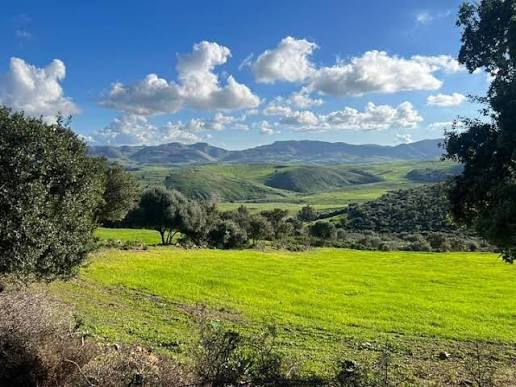


The making process begins before a bowl or plate acquires its final form.
Chmissa gathers clay from the surrounding environment and prepares it for use. The material must be broken down, cleaned, soaked, kneaded, and brought to a workable condition before shaping begins.
She builds each object directly by hand without using a potter’s wheel.
Pressure, moisture, thickness, and balance must be judged throughout the build. Clay that is too wet may struggle to hold its structure. Clay that becomes too dry may resist joining or crack under pressure. The material requires adjustment as its condition changes.
After shaping the form, Chmissa develops its surface through markings and applied materials.
Her motifs are not calculated through a predetermined design system. They emerge from things she has grown up seeing around her. Birds, fish, other animals, lines, checks, borders, and geometric arrangements can enter her pottery through familiarity.
Chmissa also associates parts of this visual vocabulary with forms once seen in Amazigh tattoo traditions. This does not mean that every line or shape carries one fixed symbolic meaning.
The pottery must dry sufficiently before it is fired outdoors. Heat, smoke, fuel, ash, placement, and airflow can all contribute to differences across the finished surfaces.
These stages help explain why two examples of the same product can remain recognisably related without being visually identical.
Building a Table
Every form can function independently. Together, the four products support different parts of a meal.
Zerka and Zephyr address individual use: one broader plate and one deeper bowl.
Storka and Hout introduce shared forms: one low open bowl and one larger plate for dishes placed at the centre of the table.
How many pieces you need depends on the way meals are prepared, served, and shared. The collection can begin with one object and develop gradually.
Choose a Prepared Set
Explore ready-made combinations of Chmissa’s bowls and plates for individual dining, shared meals, and larger tables.
Build Your Own Set
Choose the forms and quantities that correspond with your household, daily meals, and approach to hosting.
Variation, Use, and Care
Each piece is shaped and marked by hand.
Differences in outline, rim alignment, motif placement, surface texture, and tonal distribution are therefore expected between individual pieces. The object received may not reproduce the photographed example line for line.
These differences should remain within the identity and intended function of the selected product. Natural variation does not include damage or structural failure.
Understand Handmade Ceramic Variation
These pieces should be maintained according to the material requirements of hand-built earthenware. Careful washing, drying, storage, and gradual temperature transitions help protect their surfaces and structure over time.
Product-specific details should be consulted before use. Do not assume that every piece is suitable for a dishwasher, microwave, oven, direct flame, or sudden temperature change.
For ordering, delivery, returns, refunds, and managing an order, visit Customer Care.
Explore the Wider Context

Meet Chmissa
Learn how Chmissa’s practice developed through watching her mother, working around her home, and participating in every principal stage of pottery production.

Understand Sejnane Pottery
Place these objects within the wider women-led earthenware tradition of Sejnane, including its materials, forms, transmission, and continued practice.

Follow the Making Process
See how locally gathered clay is prepared, shaped without a wheel, marked, dried, and fired outdoors.