Tourist Scams in Tunisia
Updated: Jul 2

Tunisia is one of the easiest countries in North Africa to travel through; friendly, affordable, and full of layered culture. Most visitors experience nothing but warmth. But like anywhere that welcomes large numbers of travelers, it helps to understand a few local dynamics that can occasionally lead to confusion or unfair pricing.
This isn’t a warning list. It’s a guide to reading the rhythm of daily life, and to traveling Tunisia smoothly, respectfully, and with confidence.
A simple guide
In short:


Most visitors leave Tunisia remembering its cafés, beaches, medinas, and conversations—not scams. While occasional tourist pricing and informal situations exist, they rarely define the experience. Understanding a few local customs is usually all that's needed to experience Tunisia with confidence.
What most visitors actually experience

Some travelers arrive expecting to stay alert for scams, overcharging, or constant tourist targeting.
What they often find instead is a country where daily life feels far more routine than expected.
Like anywhere, occasional tourist pricing or informal situations can happen. But for most visitors, that is simply not what daily reality feels like.
Tunisia’s tourism atmosphere is usually much closer to Mediterranean tourism culture with informal systems than to a high-risk scam environment.
The country receives millions of visitors every year, and daily life continues through tourism, work, family life, and everyday social activity.
Taxi pricing and tourist overcharging

Taxis and the “two-rate logic”:
In cities like Tunis, Sousse, and Hammamet, taxis are yellow and metered. Some drivers, especially near hotels or airports, may say the meter is “broken” or prefer a flat rate. This is less a scam than a local habit; many drivers see tourists as a different market and quote a higher rate by default.
The best approach is simple: smile, stay polite, and insist on the meter before the ride starts. If it’s refused, thank them and take another taxi.
You can also use ride-hailing apps like inDrive or Yassir, which are available in most major cities.
Louages and shared transport:
Louages (shared minibuses) are Tunisia’s intercity backbone; fast, affordable, and safe. Each louage displays its destination in Arabic on the windshield, so check it before you board. Prices are fixed and paid at the station counter, not to the driver directly.
Related guide: Mobility & Transport.
Medina sellers and negotiation culture


The referral habit
If you ask someone where to buy a rug, pottery, or olive oil, don’t be surprised if they take you to their cousin’s or friend’s shop. This “referral” habit is part of Tunisian culture, helping your network is seen as natural.
Sometimes, though, it limits your options or leads to higher prices. If you’re not comfortable, a simple, polite “thank you” and continuing on your way is enough.
The medina experience
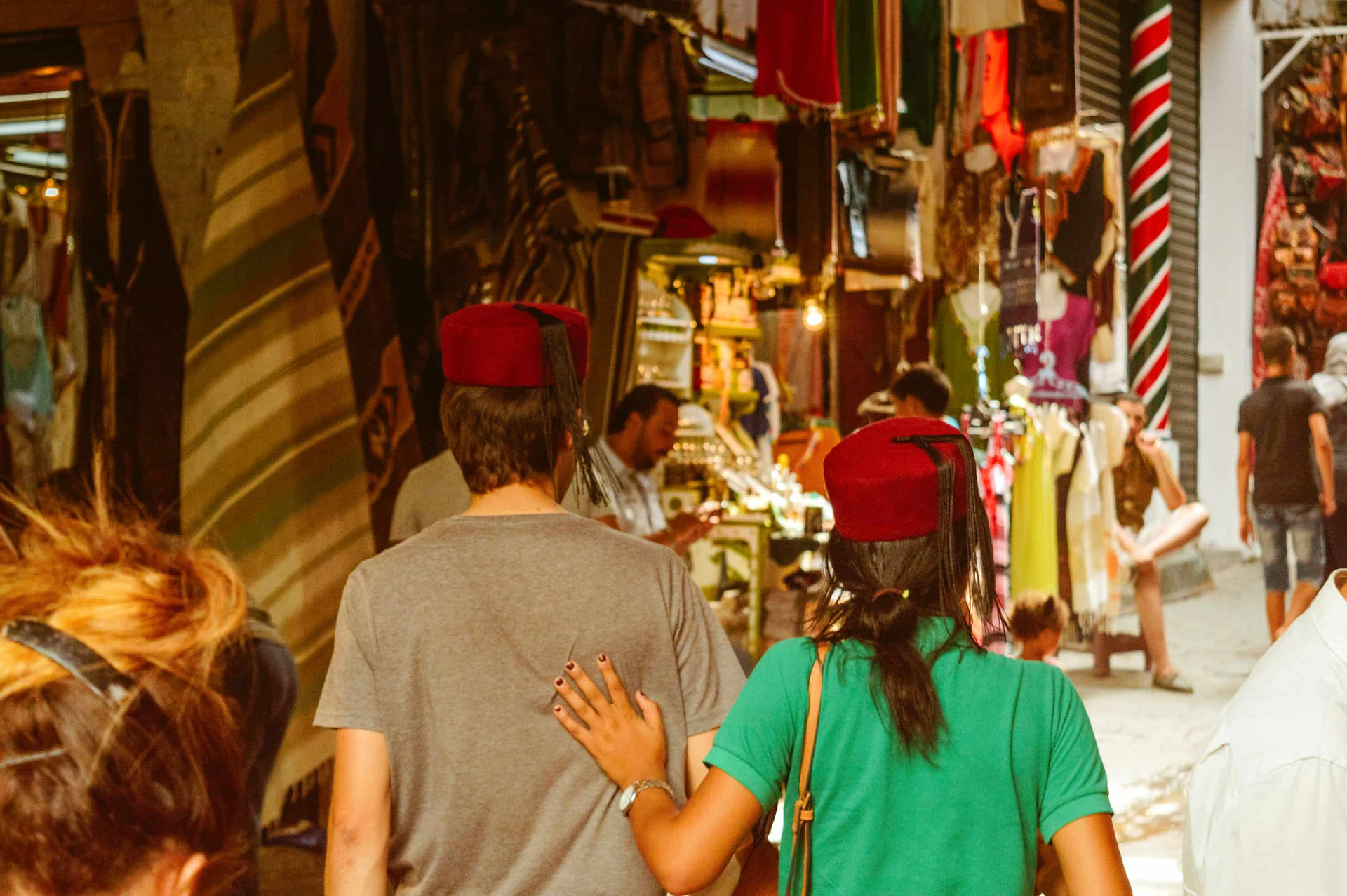
The medina of Tunis and other old towns are living spaces, not staged tourist markets. Locals shop here daily, and most vendors are gentle compared to other destinations in the region. Bargaining is normal but not aggressive; it’s more of a conversation than a battle.
When browsing:
Ask where the object was made and by whom.
Feel the texture and weight, genuine handwork usually carries small irregularities.
Don’t hesitate to walk away if something doesn’t feel right.
What tourists often misinterpret
One of the biggest misunderstandings about Tunisia is assuming that social intensity, negotiation, or visible tourism commerce automatically indicate danger.
In reality, Tunisia often feels socially more active than threatening.
Many visitors arrive expecting scams, instability, or criminality, then discover a country where daily life mostly revolves around cafés, beaches, restaurants, hotels, family public life, and ordinary tourism movement.
This perception gap is closely connected to the broader difference between Tunisia’s online image and lived reality.
Conversations and connection


Tunisians are naturally social and curious, talking with strangers is part of daily life. Locals may ask where you’re from, what you think of Tunisia, or invite you for tea. Most of the time, these gestures are genuine.
That said, as everywhere, some people might be motivated by what they can gain; a tip, a sale, or attention. The rule is simple: listen to your body. If the conversation feels tight or forced, step back. If it feels open and safe, it can lead to a truly memorable exchange.
Boundaries are respected when expressed calmly and clearly.
Everyday Situations
Street Vendors and Beach Sellers
On beaches or in tourist areas, you’ll meet vendors selling machmoum (jasmine bouquets) or mint tea. Most are polite, and trying these small delights is part of local life. Occasionally, one might be insistent, a friendly but firm “no, thank you” is enough.
Money and Belongings
Tunisia’s crime rate is relatively low, and violence against tourists is rare. Petty theft or pickpocketing can happen in crowded areas like markets or transport hubs — as it does across the Mediterranean.
Keep your phone and wallet secure, avoid displaying large amounts of cash, and use your hotel safe for passports or extra cards.
Relationships and Common Sense
Tunisia’s warmth can sometimes blur lines, especially in romantic or emotional contexts. Like anywhere, some people may use charm for financial or social motives. Enjoy connection, but keep perspective, real relationships grow slowly.
Trust your instincts, stay kind, and avoid sending money or personal details to people you’ve just met.
See also:
A Cultural Reminder Before You Go


Tunisia runs on conversation, respect, and human connection. Most situations that travelers label as “scams” are simply cultural misunderstandings or differences in expectation.
A firm, polite tone usually solves everything. When approached with openness and awareness, Tunisia offers not only safety but genuine hospitality, the kind that turns strangers into friends.
For many travelers in 2026, the experience feels much more like: a relaxed Mediterranean tourism environment with occasional informal friction than the dangerous scam-heavy destination many people still imagine beforehand. (The Times)
FAQ – Scams and Safety in Tunisia
Are there scams in Tunisia?
Minor scams exist, mostly related to pricing or unsolicited offers, but violent or organized scams are extremely rare.
Do taxis use meters?
Yes. Yellow taxis in cities are metered. Always confirm the meter is on before departure or use ride-hailing apps like inDrive or Yassir.
Is the medina safe for tourists?
Yes. The medina of Tunis is among the calmest in North Africa. Stay alert as you would anywhere busy, but it’s perfectly walkable and welcoming.
Can I bargain in Tunisia?
Yes, bargaining is normal but friendly. It’s part of social exchange – smile, engage, and agree on a fair price for both sides.
Is Tunisia safer than other Mediterranean destinations?
Many travelers experience Tunisia as calmer and less aggressively tourist-oriented than some major Mediterranean destinations.