Is Tunisia Safe for Solo Female Travelers?
Updated: Aug 11

For most women visiting Tunisia, the biggest surprise is how much more ordinary the country feels in practice than online narratives suggested beforehand.
Many first-time visitors arrive expecting tension or harassment, then encounter something much closer to Mediterranean public life, everyday urban rhythm, and ordinary movement through public space.
That does not mean every woman experiences Tunisia the same way.
Like many Mediterranean countries, experiences still depend on environment, visibility, transport, timing, region, and personal comfort navigating socially active public spaces.
But for most solo female travelers, Tunisia feels significantly more manageable, modern, and socially functional than older internet narratives imply.
Quick guide
Why many women feel uncertain before visiting

A large part of Tunisia’s image online is still shaped by:
outdated regional assumptions,
emotionally amplified Reddit discussions,
generalized warnings about North Africa,
and internet narratives that often flatten the country into one single atmosphere.
As a result, many women arrive expecting hostility or restrictive public environments.
But for most visitors, Tunisia feels much closer to ordinary Mediterranean public life than they expected before arriving.
That does not mean uncomfortable moments never happen.
It means Tunisia is often: socially more layered than internet narratives suggest.
The broader perception gap behind this is explored further in Why Tunisia Feels Different Online Than in Real Life.
What solo female travelers actually experience in practice


Many solo female travelers in Tunisia spend their trips:
moving between cafés,
using transport,
visiting beaches,
exploring coastal cities,
shopping,
walking publicly,
and navigating tourism environments without major incidents.
At the same time, some women still experience:
attempts at conversation,
occasional catcalling,
or moments of emotional discomfort in highly visible environments.
The important distinction is that Tunisia usually feels socially active before it feels dangerous.
For many travelers, the emotional adjustment comes more from:
visibility,
public attention,
and unfamiliar social rhythm
than from constant physical threat.
And over time, many visitors begin distinguishing between:
social observation,
public curiosity,
ordinary Mediterranean interaction,
and genuinely unsafe situations.
That shift often changes the emotional experience of the country significantly.
Attention does not mean danger

One of the biggest misunderstandings many solo travelers have in Tunisia is assuming that: attention automatically means threat.
Foreign women may attract attention because they are:
visibly foreign,
differently dressed,
speaking another language,
or simply more socially noticeable in certain environments.
This can initially feel emotionally intense, especially for travelers coming from:
quieter Northern European environments,
socially distant cities,
or highly anonymous public cultures.
But in Tunisia, attention is often:
observational,
socially curious,
or visibility-based
rather than automatically aggressive.
This does not mean discomfort is imaginary.
It means discomfort and danger are not always the same experience.
Understanding this distinction often makes Tunisia feel significantly easier emotionally over time.
The broader social dynamics behind visibility and public interaction are explored further in Social Norms in Tunisia.
Situations that usually require more awareness
Most solo female travelers describe Tunisia as easiest in busy public environments, cafés, beaches, tourism-oriented areas, and active daytime settings.
More awareness is usually useful around:
emotionally draining transport situations,
certain taxi interactions,
highly unfamiliar environments,
or moments where exhaustion reduces confidence and readability.
This is not very different from many Mediterranean tourism environments generally.
The biggest challenge for many women is often emotional vigilance management rather than constant serious danger.
For a broader understanding of how awareness works across different environments, see:
How experiences change by region and environment
Tunisia is not socially uniform.
A summer evening in:
Hammamet,
Djerba,
or Sidi Bou Said
can feel completely different from:
a quiet inland environment,
an isolated late-night street,
or a dense traditional medina during peak hours.
Coastal areas generally feel:
more internationally exposed,
more socially mixed,
and more accustomed to visible foreign visitors.
Meanwhile, quieter environments may feel more observant or more locally paced,
This does not automatically mean unsafe.
It means atmosphere changes by context.
The broader rhythm behind these shifts is deeply connected to Tunisia’s wider Rhythm of Life.
Clothing, visibility, and social comfort


Clothing in Tunisia is usually less about strict rules and more about: visibility and comfort.
In:
beaches,
resorts,
coastal cities,
and tourism-oriented environments,
many tourists wear:
dresses,
shorts,
swimwear,
and ordinary summer clothing.
At the same time, some women feel emotionally more comfortable adjusting visibility slightly depending on:
environment,
transport situations,
timing,
or local atmosphere.
This is often less about restriction and more about comfort and social blending.
See Also:
Walking alone, cafés, beaches, and transport


Most solo female travelers spend large parts of their trips:
sitting alone in cafés,
walking through cities,
visiting beaches,
shopping,
and moving independently between destinations.
Walking alone
Busy daytime environments usually feel significantly easier than isolated late-night spaces.
Cafés
Café culture is deeply embedded in Tunisia’s social rhythm, though some environments may initially feel more male-dominated depending on region and atmosphere.
Beaches
Tourist beaches and resort areas generally feel socially relaxed and internationally mixed.
Transport
Most transport stress comes more from:
uncertainty,
negotiation,
or unfamiliarity
than from physical danger.
The broader timing and atmosphere behind these environments are connected to Tunisia’s wider Rhythm of Life.
What tourists often misinterpret


Many first-time visitors confuse:
visibility with targeting,
staring with hostility,
loudness with danger,
or unfamiliar social interaction with instability.
This does not mean uncomfortable situations never happen.
It means Tunisia often feels more socially alive than socially threatening.
That distinction matters enormously.
For many solo female travelers, the country gradually shifts from “emotionally hard to read” to much more normal and understandable once public rhythm and visibility dynamics become familiar.
Before you arrive


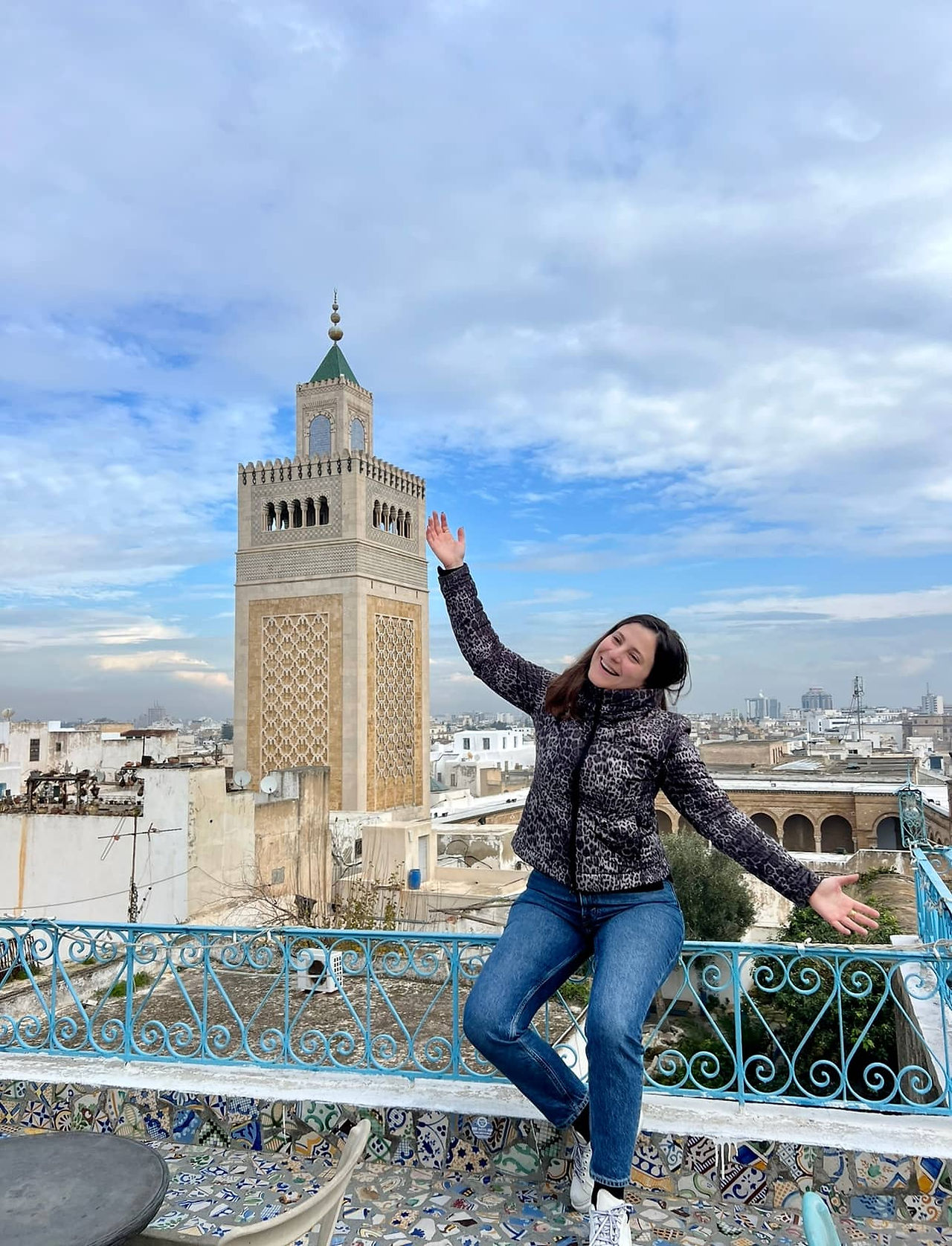
The most useful preparation for Tunisia is perspective.
Understanding:
that Tunisia today often feels much more ordinary than expected,
that tourism environments are highly normalized,
that Mediterranean public life is more socially visible,
and that online narratives frequently exaggerate emotional intensity
usually changes the experience significantly.
Tunisia is not a perfectly frictionless environment for every woman.
But for most solo female travelers, it feels far more like a normal Mediterranean country with regional nuance than the restrictive or intimidating image some people expect before arriving.