Can Unmarried Couples Stay Together in Tunisia?
Updated: Jun 21

For most foreign tourists, Tunisia usually feels much more like a normal Mediterranean tourism country than many couples expected before arriving.
That does not mean every environment functions the same way.
Hotels, resorts, guesthouses, and local settings can all operate differently.
But for most visitors, the question tends to feel bigger before arrival than during the trip itself.
Quick guide
At a glance


Yes. In most tourism-oriented hotels, resorts, and rentals in Tunisia, unmarried foreign couples can generally stay together without issue.
Experiences can vary depending on the type of accommodation, region, and local environment, but for most international visitors, staying together is treated as a routine part of tourism rather than an unusual situation.
Why online answers about this feel contradictory
Tunisia is often discussed online through:
broad regional assumptions,
Reddit anecdotes,
older legal discussions,
or highly conservative interpretations disconnected from everyday reality.
As a result, couples researching Tunisia sometimes imagine:
scrutiny,
hotel interrogations,
or relationship-related tension everywhere.
But for foreign tourists, the practical experience is much more ordinary.
This does not mean every environment feels identical.
It means Tunisia today is: far more socially layered than simplified internet narratives suggest.
The broader perception gap behind this is explored further in:
What most tourists actually experience in Tunisia


For most foreign couples staying in:
international hotels,
resorts,
tourism-oriented environments,
and coastal cities,
the experience is uneventful.
Hotels are accustomed to:
international tourism,
mixed-nationality couples,
foreign visitors,
and ordinary tourism behavior.
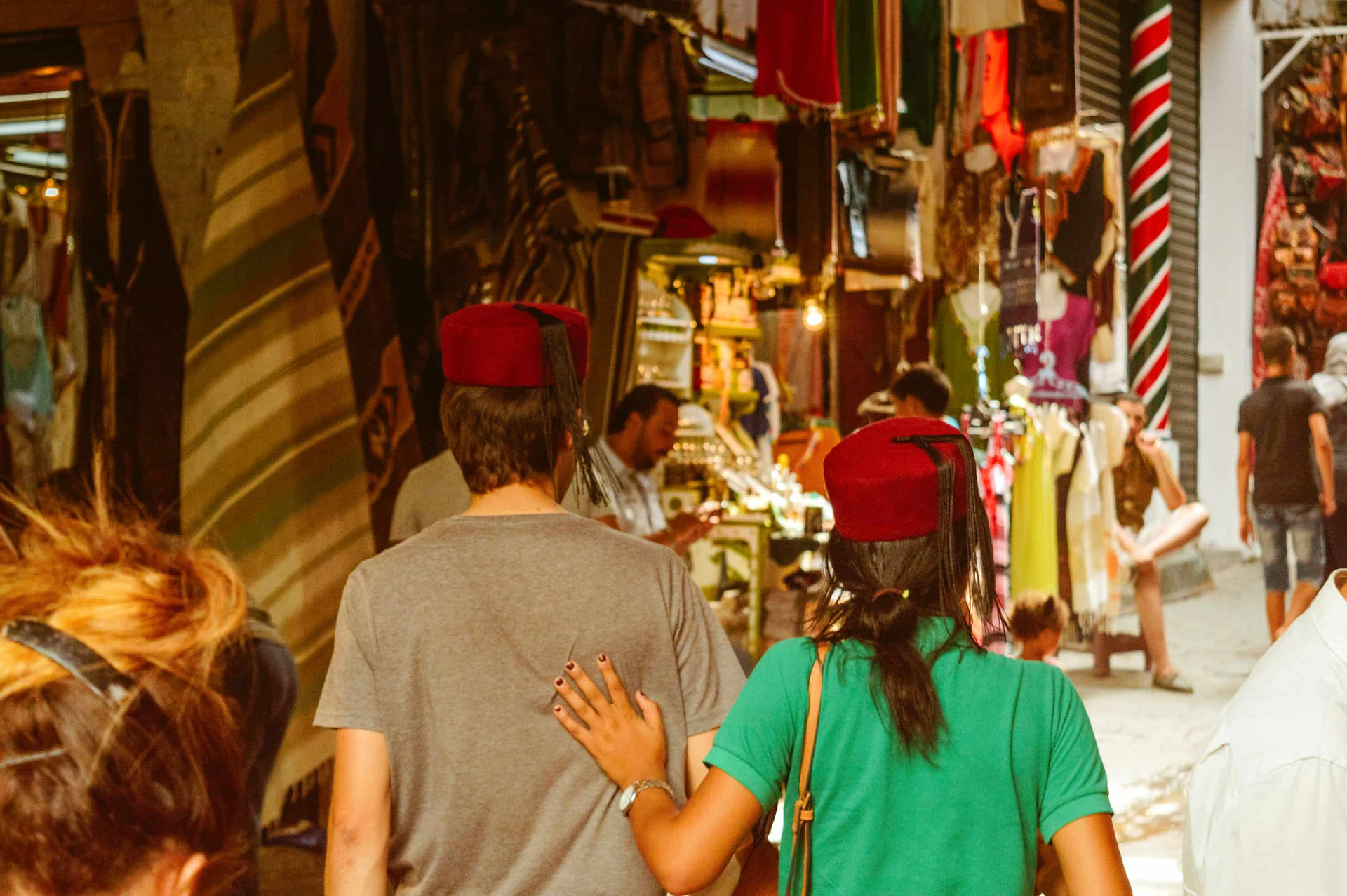
Most travelers simply encounter normal hotel check-ins, beaches, cafés, restaurants, nightlife, and everyday public life.
That does not mean every accommodation behaves identically.
But for many foreign tourists, staying together is generally treated as a routine part of tourism.
Tourist hotels, resorts, Airbnb, and smaller guesthouses


Large hotels and resorts
Mainstream tourism infrastructure generally operates pragmatically around international tourism realities.
Airbnb and rentals
Experiences often depend more on individual hosts and neighborhood atmosphere than one universal pattern.
Smaller guesthouses and traditional environments
Smaller locally run guesthouses may sometimes feel more locally paced and less tourism-oriented than large hotels or resorts.
Tunisia changes significantly depending on:
region,
tourism density,
and social atmosphere.
The broader geographic differences behind this are explored further in Tunisia’s Regions.
Tunisia often feels much more Mediterranean than visitors expect


For many travelers, the real surprise is normalcy.
Families occupy public space.
Couples move publicly.
Tourism is highly visible.
Beach culture is strong.
Public life stays active late into the evening.
This does not erase contextual differences.
But it does mean Tunisia often feels more relaxed and ordinary in practice than some narratives imply.
The broader atmosphere behind this is deeply connected to Tunisia’s wider Rhythm of Life.
Public affection and visibility
Public affection in Tunisia is usually interpreted through environment, timing, and atmosphere rather than one strict universal social rule.
For example, subtle affection or holding hands often feels very different socially from:
highly visible kissing,
emotionally loud PDA,
or behavior that strongly contrasts with the surrounding environment.
Tourism-oriented coastal environments generally feel more relaxed and socially mixed.
Meanwhile, quieter environments may feel more family-oriented, or more visibility-sensitive.
See also:
What usually creates attention or friction
For most foreign couples, attention usually comes from visibility and context rather than the relationship itself.
Situations that may attract more attention include:
highly visible PDA,
conservative local environments,
or emotionally loud behavior.
This is not unique to Tunisia.
Many Mediterranean societies still operate through:
social observation,
environmental expectations,
and contextual public behavior.
The key difference is that Tunisia is often imagined online through much more rigid assumptions than many visitors actually encounter.
What tourists often misinterpret

Many travelers still approach Tunisia expecting scrutiny or restrictive tourism environments, but for large parts of Tunisia, the lived reality is usually:
ordinary hotels,
beaches,
cafés,
nightlife,
tourism movement,
and normal Mediterranean social life.
This does not mean context disappears.
It means Tunisia is often: much more ordinary in practice than internet narratives suggest beforehand.
That distinction explains why so many online discussions feel contradictory.
Before you arrive
The most useful thing to remember is that Tunisia is not one environment.
A large resort, a coastal city, a traditional guesthouse, and a quieter inland town can all feel different from one another.
Most foreign couples who stay in hotels, resorts, and tourism-oriented accommodations encounter ordinary tourism life: checking into hotels, visiting cafés, exploring cities, spending time at the beach, and moving through public spaces without much thought about the question beforehand.
Understanding that context matters more than broad assumptions usually makes the experience easier to navigate.
Tunisia is not socially identical everywhere.
But for most foreign visitors, staying together is generally a routine part of travel rather than a defining part of the trip.