Is Tunisia Safe to Visit Right Now?
- 5 days ago
- 4 min read

Yes — Tunisia is safe to visit right now.
People move freely across cities, coastal areas, and inland towns. Daily life is active, visible, and easy to step into as a visitor.
A simple guide
What everyday life looks like

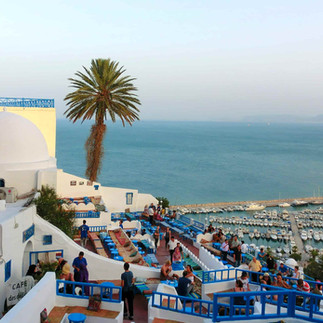




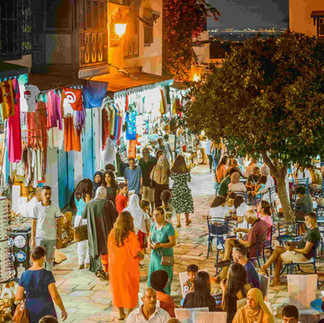


In places like Tunis, La Marsa, or Sousse, life happens openly and continuously.
Cafés stay active into the evening.
People move between streets, terraces, and shops.
Families occupy public space late into the night, especially in summer. Coastal areas remain socially active, and movement between neighborhoods, cafés, and seaside areas feels ordinary and visible.
This is the environment visitors enter.
Tunisia does not feel like a country frozen by fear or tension. For most travelers, daily life feels socially alive, public, and easy to read once they arrive.
If you want to understand this rhythm more clearly, you can explore Tunisia’s wider Rhythm of Life.
Moving through the country
Travel in Tunisia is not limited to isolated tourist zones.
People and visitors move normally across:
cities,
coastal towns,
inland regions,
beaches,
historical sites,
and everyday public environments.
Some places are more tourism-oriented than others, but this changes infrastructure and atmosphere more than basic safety itself.
In quieter regions, the pace slows down. In coastal cities, public life becomes denser and more active. In smaller towns, interactions are often more direct and personal.
But across most of the country, movement itself feels ordinary.
Visitors are not separated from daily life. They move inside it.
If you want a clearer understanding of how movement works between regions, towns, and cities, you can explore Mobility & Transport in Tunisia and Tunisia’s wider Regions.
How safety works in practice
Safety in Tunisia comes from how space is used.
Streets, cafés, shops, terraces, and neighborhoods remain active throughout the day and into the evening. Public life is visible, shared, and socially present.
As a visitor, you move within that same environment.
As in any busy place, a basic level of awareness in crowded areas is enough.
If you want a clearer view of how to move with ease and awareness in different situations, you can explore Safety and Awareness in Tunisia.
And for a more specific look at small tourist frictions such as taxi pricing, medina pressure, or informal overcharging, see Tourist Scams in Tunisia.
Solo and female travelers





Many women travel alone in Tunisia, across cities, coastal areas, and smaller towns.
Being alone here doesn’t mean being isolated.
Public environments remain active, visible, and socially shared, even in quieter settings. In places like Tunis, La Marsa, Hammamet, or Djerba, solo travelers are part of an already functioning public rhythm.
As in many Mediterranean countries, a simple awareness of your surroundings is usually enough to move comfortably.
Some visitors may notice:
social attention,
curiosity,
or public visibility,
especially in environments where tourists stand out more visibly. But for most travelers, Tunisia feels far more ordinary and manageable in practice than many online discussions suggest beforehand.
You can explore this more deeply through:
Why safety questions come up
Some questions about Tunisia come from older references.
In 2015, Tunisia experienced terrorist attacks targeting tourism sites, including the Bardo Museum in Tunis and the beach attack in Sousse. These events became internationally associated with the country’s image online.
Since then, security has been reinforced, especially around public spaces, transport, and tourism areas. Daily life across the country has continued normally.
Similar isolated incidents have happened in many countries, including in France and Belgium. They are treated as exceptions, not as a reflection of everyday conditions.
International travel reporting increasingly reflects the gap between Tunisia’s online image and its lived reality.
See also:
A simple way to understand it
Tunisia follows a Mediterranean rhythm.
If you have travelled through:
southern Italy,
Greece,
Spain,
or other Mediterranean societies,
much of the atmosphere will feel familiar:
active public life,
visible social rhythm,
cafés and terraces,
late evenings,
coastal movement,
and shared public space.
Tunisia has its own cultural logic and regional differences, but for most travelers, the emotional reality feels like an ordinary Mediterranean life.
Where this connects
Understanding Tunisia becomes easier when you understand how the country functions structurally.
This continues further through:
And across:
The honest answer
Tunisia is safe to visit right now.
Not as an exception, and not because visitors are separated from reality, but because daily life across most of the country functions openly, socially, and continuously.
Visitors move within that same structure.


