Why Tunisia Remains Structurally Stable in a Fragmenting World
Updated: May 5
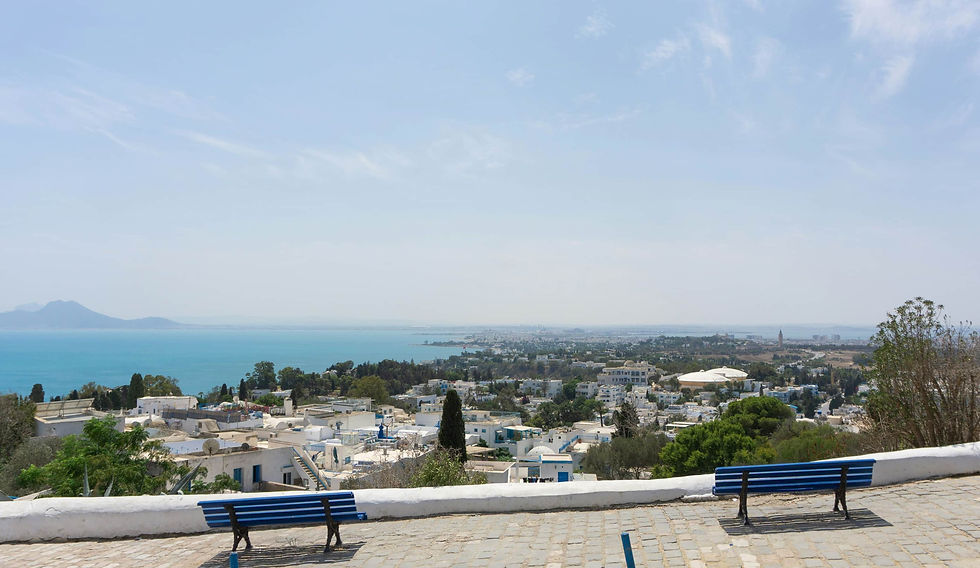
Global stability is no longer a background condition.
Across regions, systems are being tested — through energy disruptions, shifting alliances, and prolonged geopolitical tension.
In this environment, stability is not defined by size, visibility, or narrative. It is defined by structure — how a country is positioned, how its systems operate, and how its society holds together over time.
Tunisia stands out in this context.
Not as a headline-driven exception, but as a country where multiple layers align: geography, society, regional position, and institutional continuity.
This alignment is what allows stability to hold.
Quick Guide
Stability Through Structure
The global environment increasingly rewards countries that are organized internally and positioned wisely externally.
Disruptions tend to concentrate in:
High-tension geopolitical zones
Critical supply chokepoints
Regions with deep internal fragmentation
At the same time, countries that operate with:
coherent internal systems
balanced external relations
and manageable exposure
are able to maintain continuity even as global conditions shift.
Stability today is less about avoiding all risk, and more about how well a system absorbs and navigates it.
Limited External Exposure
Tunisia’s geographic and geopolitical position plays a central role in its stability.
It sits outside the main theaters of global conflict and away from the primary zones of military escalation. It is not embedded in high-risk strategic rivalries, nor is it directly exposed to the most volatile global pressure points.
This does not isolate Tunisia — it positions it with distance and flexibility.
At the same time, Tunisia is not dependent on the most sensitive global supply routes.
Its functioning does not hinge on a single chokepoint or a fragile long-distance chain.
This combination — connection without overexposure — reduces the likelihood of sudden systemic shocks.
A Supportive Regional Environment
Tunisia operates within a region that, despite its own complexities, provides structural support rather than isolation.
Its immediate neighbors are energy-producing countries, creating a surrounding environment where access and proximity matter. This regional configuration reduces reliance on distant, high-risk supply channels and allows for more direct forms of exchange.
Rather than being cut off or overly dependent, Tunisia sits within a connected regional space where flows of energy, goods, and movement sustain continuity.
This is not a condition of independence, but of balanced interdependence — which is often more stable over time.
Internal coherence
External positioning alone does not create stability. It must be matched by internal coherence.
Tunisia benefits from a unified social fabric, with a strong shared identity and no deep structural divisions along ethnic or regional lines. This cohesion reduces the likelihood of internal fragmentation and allows for more predictable social dynamics.
At the same time, everyday systems — from administration to education to public services — continue to function across the country.
Stability, in this sense, is not abstract. It is visible in how consistently a system works on a daily basis — in homes, in cities, and in the way objects and spaces are used and maintained.
From transition to organization
Over the past decade, Tunisia moved through a political transition that reshaped its institutional landscape.
That phase has now given way to something more structured: organization.
The intensity of systemic change has decreased, and the country is operating within a more defined and controlled framework. This shift restores direction and continuity — two essential components of long-term stability.
Tunisia is no longer reacting to transformation. It is operating within a system that is increasingly organized. This shift becomes even clearer when looking at how the country is evolving today.
Population as a system driver
A country’s structure is only as strong as the people who operate within it.
Tunisia’s population contributes directly to its stability through:
a broad educational base
strong adaptability
and cultural coherence
This creates an environment where systems are not only designed, but understood and sustained.
In addition, Tunisia’s global diaspora represents an extension of this capacity — a network of skills, experience, and exposure that remains connected to the country.
This human layer is not separate from the system — it is one of its strongest drivers.
Operational Rhythm Shift
In a world where many countries are reacting to instability, Tunisia is operating with a different rhythm.
There is less systemic volatility, more continuity, and a clearer sense of direction. The country is not defined by constant disruption, but by ongoing function. This difference is subtle, but significant.
This shift becomes clearer when looking at how the country is evolving in practice, as Tunisia moves from transition to momentum.
Stability is often most visible not through dramatic change, but through the absence of breakdown and the presence of steady operation.
That is where Tunisia currently stands.
Structural Stability in Practice
In today’s global context, structural stability can be understood as a combination of:
Limited exposure to major geopolitical shocks
Balanced regional positioning
Coherent internal systems
Continuous operation of core institutions
Tunisia reflects this combination.
It is not a system built on isolation or exceptional advantage, but on alignment — between where it is, how it functions, and how its society operates.
Why Tunisia’s stability is durable
As the global environment becomes more fragmented, the countries that remain stable are those with clear structure and balanced positioning.
Tunisia’s stability is not the result of temporary conditions or external narratives. It emerges from the way its geography, regional context, institutions, and society align.
In a world where many systems are under strain, Tunisia continues to operate with continuity. And that continuity, grounded in structure, is what makes its stability durable.


