Why Is Africa Called Africa? The History Behind the Name

Most of us never question why Africa is called Africa.
The name appears on maps, in classrooms, in the news, and in everyday conversation so naturally that it feels timeless—as though it has always belonged to the continent. Yet the history of the name tells a very different story.
The continent was not originally called Africa.
The earliest documented use of the name referred instead to a historical region centered on present-day Tunisia. Over the course of more than two thousand years, that regional name gradually expanded through history, geography, and cartography until it became the accepted name of an entire continent.
That journey is one of the most remarkable stories in historical geography.
It also raises two different questions that are often confused.
The first asks where the word Africa came from. Historians have proposed several explanations, but no single theory has gained universal acceptance.
The second asks how a name that once referred to a relatively small region came to describe the world’s second-largest continent. Unlike the word’s earliest linguistic origin, that historical evolution is exceptionally well documented.
Understanding the difference between those two questions changes the story entirely.
This article follows the documented journey of the name Africa from its earliest recorded use in a region centered on present-day Tunisia to its adoption as the name of an entire continent. Along the way, it explores what historians know with confidence, what remains debated, and how one of the world’s most familiar geographical names came to preserve more than two thousand years of history.
A simple Guide
Africa Wasn’t Originally the Name of a Continent


Today, the name Africa describes the world’s second-largest continent. It stretches from the Mediterranean Sea to the Cape of Good Hope, encompassing more than fifty countries and an extraordinary diversity of landscapes, cultures, and histories.
It has not always meant that.
The earliest documented use of the name Africa referred to a much smaller place—a historical region centered on present-day Tunisia rather than the continent as a whole.
This difference is easy to overlook because the modern meaning of the name has become so familiar. When we read the word Africa today, we instinctively picture an entire continent. Ancient writers, however, often understood it very differently. For them, Africa described a specific region whose meaning was shaped by the geography and political realities of their own time.
That change in meaning is the key to understanding the history of the name.
The question is therefore not simply where the word Africa came from, but how a name that once belonged to a relatively small region gradually came to describe an entire continent.
Before exploring that remarkable transformation, we first need to understand what the earliest documented Africa actually was.
What Did “Africa” Originally Refer To?


To answer that question, we have to leave the modern map behind and return to the ancient Mediterranean.
The earliest documented Africa was not a continent. It was a historical region centered on present-day Tunisia.
Its history is closely connected to one of antiquity’s greatest rivals: Carthage.
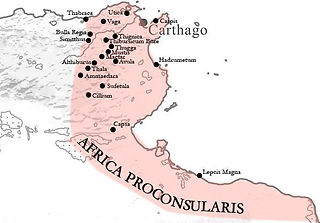
After defeating Carthage in the Third Punic War in 146 BC, Rome annexed the surrounding territory and established the Province of Africa. It was the first Roman province on the African mainland and took its name from the region it administered. Over time, the province became known as Africa Proconsularis and developed into one of the Roman Empire’s most prosperous and strategically important territories.
Its heart lay around Carthage and the fertile plains of what is now northern Tunisia. At different periods, its boundaries extended into parts of modern Algeria and Libya, but its political, economic, and cultural center remained in the land that forms present-day Tunisia.
For Roman writers, merchants, administrators, and travellers, this was Africa.
Not the Sahara.
Not the Nile Valley.
Not the continent stretching thousands of kilometres to the south.
Simply a region on the southern shore of the Mediterranean whose influence reached far beyond its borders.
Understanding this original geography changes the story.
The continent did not receive its name from an abstract idea or a distant civilization. It ultimately inherited it from a historical region centered on present-day Tunisia—a region whose name would survive long after the Roman province itself had disappeared.
That naturally raises the next question.
Why was this region called Africa in the first place?
Where Did the Name Africa Come From?
The history of the name Africa begins before the Roman province that later carried it.
Long before Rome governed the region, the lands around Carthage and present-day Tunisia were home to indigenous North African communities, alongside the Punic civilization that had developed there over centuries. Somewhere within this older world lies the earliest history of the name Africa.
The surviving evidence does not allow us to reconstruct that history completely. What it does preserve is an important clue: the Afri.
Ancient sources use Afri and Afer for people associated with the region around Carthage and present-day northern Tunisia. The name Africa is widely understood to be connected to them, with the later Province of Africa taking its name from the people or regional name already associated with this land.
In other words, Rome appears in this story not as the creator of the name, but as one of the civilizations through which it entered the surviving historical record.
The harder question is where Afri itself came from.
Here, the evidence becomes much less certain. Scholars have explored possible connections with indigenous North African and Amazigh languages, as well as Punic, Phoenician, Latin, and other linguistic traditions. No explanation has achieved universal acceptance, and the surviving sources do not tell us what the people first associated with the name called themselves or exactly how the word emerged.
That uncertainty matters, but so does what it reveals.
Written history does not begin when a place begins. Names, communities, languages, and identities can exist for generations—or centuries—before they appear in the records that survive today. Rome's documentation of Africa therefore gives us an important historical marker, not necessarily the beginning of the name itself.
What we can say with confidence is that Africa was associated with the land and people of this part of North Africa before its later expansion into a continental name. Its deepest linguistic roots remain debated, but its earliest documented geography brings us back repeatedly to the region around Carthage and present-day Tunisia.
The name would go on to survive Rome itself.
What Happened to the Name After Rome?


The fall of the Roman Empire did not bring the history of the name Africa to an end.
Empires changed. Languages evolved. New political powers emerged across North Africa. Yet the name itself endured.
During Late Antiquity, the former Province of Africa remained an important centre under successive rulers, including the Vandals and later the Byzantine Empire. Although political authority changed, the historical association between the name Africa and the region centered on present-day Tunisia remained firmly established.
A new chapter began in the seventh century with the Arab Muslim conquest of North Africa.
As Arabic became the region’s principal language of administration and scholarship, the historic region came to be known as Ifriqiya (إفريقية), the Arabic form of the earlier Latin Africa. Like its Roman predecessor, Ifriqiya was centered on present-day Tunisia, although its boundaries varied over time and occasionally extended into neighboring parts of modern Algeria and Libya.
The adoption of the name Ifriqiya reveals something remarkable.
Although the Roman province disappeared, its geographical identity did not. The name was adapted to a new language, preserved by a new civilization, and carried into a new historical era.
This continuity is one of the reasons historians can trace the evolution of the name with such confidence. The story of Africa is not one of disappearance and rediscovery. It is one of continuity through change.
Even so, Ifriqiya still referred to a region rather than an entire continent.
The transformation from regional name to continental name had yet to take place.
How Did Africa Become the Name of a Continent?


The continent was not named Africa in a single moment.
No ruler stood before a map and chose the name. No decree declared that a regional name should describe an entire continent.
Instead, the transformation unfolded gradually over many centuries.
As geographical knowledge expanded, so did the meaning of the name Africa.
Roman writers had used the name for a region centered on present-day Tunisia. Medieval scholars preserved that historical tradition, while Renaissance cartographers increasingly applied the name to the wider landmass as maps became more detailed and geographical knowledge spread through printed books and atlases.
With each new generation of maps, the continental meaning of Africa became more familiar. A name that had once described a single historical region was gradually understood to describe the entire landmass stretching south from the Mediterranean.
There was no single turning point.
Rather, the meaning of the name expanded alongside humanity’s understanding of the continent itself.
This gradual expansion also reminds us that history could have taken a different path. Earlier geographical traditions had used other names, including Libya, for large parts of the African landmass. Had those traditions become dominant, the continent might bear a different name today.
Instead, it was the historical tradition associated with the Roman Province of Africa—and later Ifriqiya—that ultimately endured.
The result is the world we know today.
A name that once referred to a historical region centered on present-day Tunisia eventually became the accepted name of the world’s second-largest continent.
It is a remarkable example of historical continuity: not because the name itself changed, but because its meaning continued to grow across more than two thousand years of history.
What Historians Know—and Still Debate
By now, a clear distinction has emerged.
Some parts of the history of the name Africa are supported by extensive historical evidence. Others reach beyond what the surviving record allows us to reconstruct with certainty.
The documented evolution of the name is one of the strongest parts of the story.
Historians can trace Africa from its earliest surviving references to people and a historical region associated with Carthage and present-day Tunisia, through the Province of Africa, its continuation as Ifriqiya in Arabic, and its gradual expansion into the accepted name of an entire continent. Written sources, historical geography, linguistic evidence, and centuries of cartography preserve different stages of that journey.
What remains uncertain is the name's deeper beginning.
By the time Africa appears clearly in the surviving written record, the name already has a history. Its connection to the Afri, people associated with this part of North Africa, is widely accepted. But the evidence does not take us far enough back to establish with certainty where Afri itself came from, what it originally meant, or exactly how the name first emerged.
Several linguistic explanations have been proposed. None has achieved universal scholarly acceptance.
This distinction is sometimes lost in popular accounts. Some present one proposed origin of the word as established fact. Others treat the absence of a definitive etymology as though the history of the name itself were unknown.
Neither reflects the evidence.
The earliest origin of the word and the documented evolution of the name are different historical questions. The first reaches beyond what the surviving evidence can currently establish. The second can be reconstructed with remarkable confidence.
That difference also reveals something important about historical evidence.
The surviving record is not the beginning of history. People lived, spoke, named places, formed communities, and understood the landscapes around them long before many of those realities entered texts that survive today. The earliest written reference to a name therefore tells us when we can document it—not necessarily when the name began.
The history of Africa illustrates both sides of that process. Its deepest linguistic beginnings remain unresolved, while its extraordinary journey from a name associated with people and land around present-day Tunisia to the name of an entire continent can be followed across more than two thousand years of recorded history.
Knowing where the evidence becomes uncertain does not weaken that history.
It allows us to tell it more accurately.
Names Preserve History
The story of the name Africa begins with a simple question.
Why is the continent called Africa?
The answer reveals a history that stretches across more than two thousand years.
The earliest documented Africa was not a continent, but a historical region centered on present-day Tunisia. From there, the name endured through the Roman world, continued as Ifriqiya in Arabic, and gradually expanded until it became the accepted name of an entire continent.
Its earliest linguistic origin remains uncertain.
Its historical journey does not.
That distinction reminds us that history is not built on certainty alone. Some questions can be answered with remarkable confidence, while others remain open as new evidence and new interpretations emerge.
Perhaps the most remarkable part of this story is not where the name came from, but how far it travelled.
Across changing empires, languages, religions, and maps, the name survived while its meaning continued to grow. A word that once identified a historical region centered on present-day Tunisia eventually came to describe one of the largest and most diverse continents on Earth.
That is why names matter.
They are more than labels. They preserve the memory of places, people, and civilizations long after the worlds that first gave them meaning have changed. Sometimes, understanding a familiar name is enough to uncover an unfamiliar history.
The name Africa is one of those histories.
Frequently Asked Questions
Was Africa named after Tunisia?
In historical terms, yes.
The name of the continent ultimately traces back to a historical region centered on the land of present-day Tunisia. The name was already associated with this part of North Africa before it became the name of the Roman Province of Africa, and over many centuries its geographical meaning expanded until Africa came to describe the entire continent.
Did the Romans invent the name Africa?
When Africa enters the surviving Roman record, the name appears to have an earlier history and is closely associated with the Afri, people connected to the region around Carthage and present-day northern Tunisia.
Rome later used Africa as the name of its province in the region, preserving the name extensively in the written and administrative record. Roman documentation therefore gives historians important evidence for the history of the name, but it should not be confused with the beginning of that history.
Who were the Afri?
The Afri were people associated in ancient sources with the region around Carthage and present-day northern Tunisia. The name Africa is widely understood to be connected to them, although their precise identity and the deeper origin of the name Afri remain uncertain.
What was Ifriqiya?
Ifriqiya (إفريقية) was the Arabic name for a historical region centered on present-day Tunisia, at times extending into parts of what are now Algeria and Libya.
Its name continued the older Africa naming tradition in Arabic. Ifriqiya is therefore an important part of the story because it shows that the regional name survived across major changes in political power, language, and civilization.
Why wasn’t the continent called Libya?
In ancient Greek geographical traditions, Libya could refer to a much larger part of the landmass than the early regional meaning of Africa.
Geographical names, however, do not usually become standard through a single decision. Different naming traditions existed for centuries, and Africa gradually became established as the continental name through later geographical and cartographic usage.
The continent could therefore have inherited another name. History ultimately preserved Africa.
Is the origin of the word Africa known?
The name Africa is widely connected to the Afri, people associated with the region around Carthage and present-day northern Tunisia. What remains unresolved is the deeper origin of Afri itself.
Scholars have explored possible connections with indigenous North African and Amazigh languages, Punic or Phoenician, and other linguistic traditions. No proposed explanation has achieved universal scholarly acceptance.
What is considerably clearer is the geography: the earliest history we can reconstruct for the name repeatedly leads back to people and land associated with this part of present-day Tunisia.
Why do historians still debate the origin of the name?
Because the history of the name Africa appears to reach further back than the surviving written sources that explain it.
By the time the name enters the historical record clearly, the region around Carthage and present-day Tunisia already had a long history of indigenous North African communities, Punic civilization, languages, trade, and cultural exchange. The name was associated with people and land in this region, but no known surviving source records when it first emerged or explains exactly what it originally meant.
Historians therefore have to work backwards from later written references, linguistic evidence, archaeology, and the historical geography of the region.
This is why the earliest linguistic origin of Africa remains debated. What survives allows us to locate the early history of the name around Carthage and present-day Tunisia with considerably more confidence than it allows us to explain the original meaning of the word itself.