Carthage Was Here First: On Power That Does Not Disappear
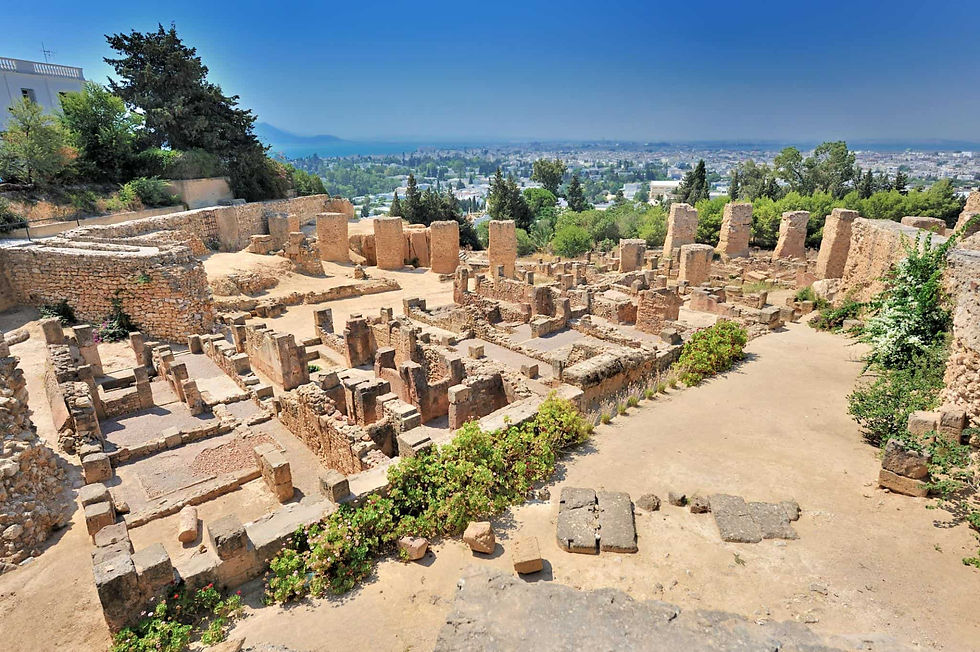
Stand in Carthage today and it can be difficult to understand the scale of what once occupied this coastline.
Columns rise between modern streets. Stone foundations disappear into grass. Archaeological sites sit between houses, roads, gardens, and railway stations. Beyond them, the Mediterranean remains almost impossibly blue.
The city itself is no longer there.
And yet Carthage is.
Its remains belong to the landscape of contemporary Tunisia, but they also belong to a much larger history: one in which North Africa was not standing at the edge of the Mediterranean world.
It was helping shape it.
Quick Guide
Before Carthage Became a Ruin

It is easy to encounter Carthage backwards.
We meet the broken columns before the buildings, the archaeological site before the city, and Hannibal before the generations of merchants, sailors, farmers, craftspeople, families, political leaders, and workers who made Carthage function.
Before it became an archaeological landscape, Carthage was one of the great cities of the ancient Mediterranean.
Traditionally founded by Phoenician settlers from Tyre in the 9th century BCE, Carthage developed far beyond its beginnings. Over centuries, it became the centre of a distinctive Punic civilization rooted in North Africa and connected across the Mediterranean.
Its position was extraordinary.
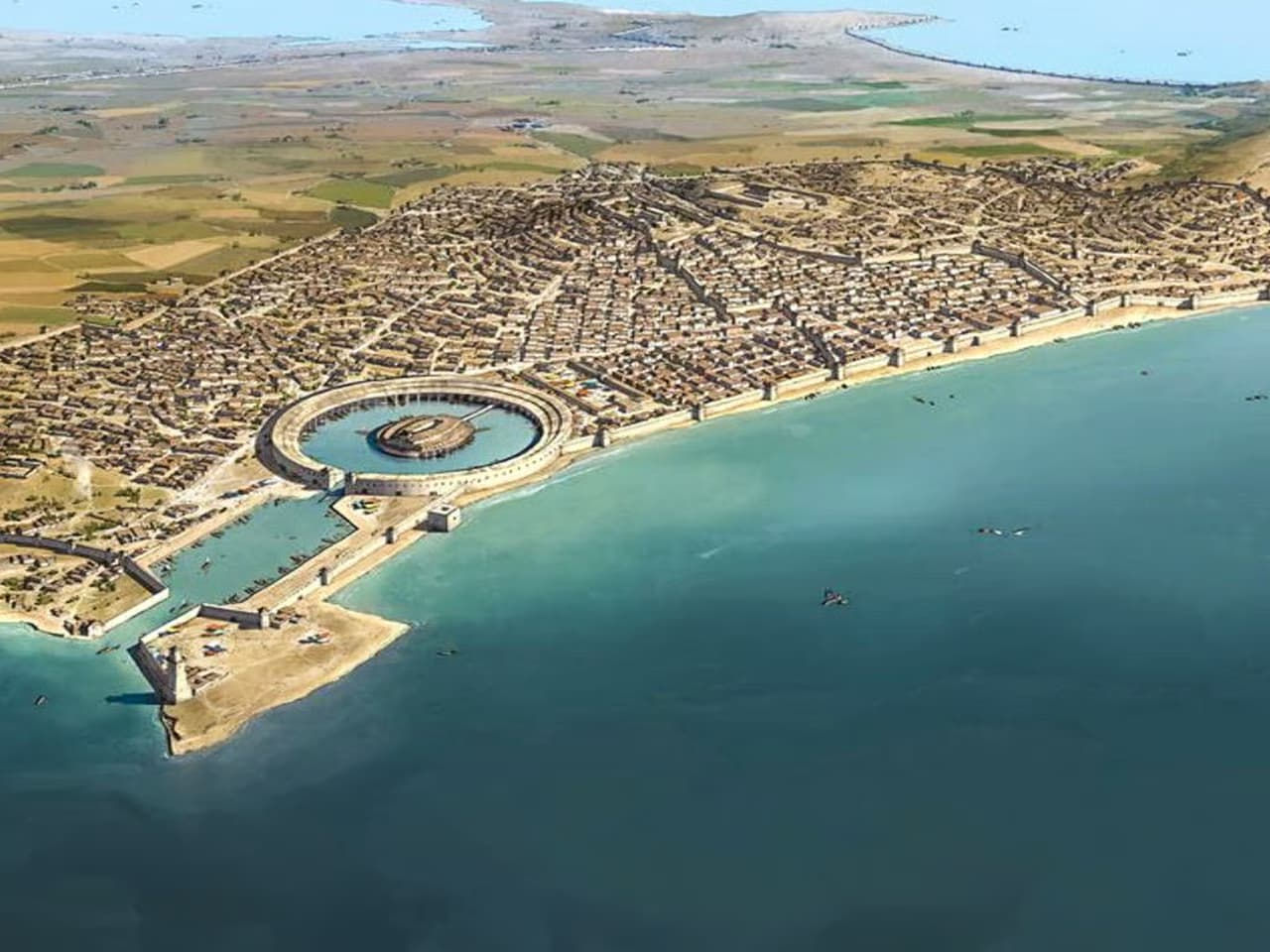
From the Gulf of Tunis, Carthage could participate in networks reaching east toward the Phoenician world and west toward Sicily, Sardinia, Iberia, and the Atlantic approaches. Maritime connections brought goods, people, technologies, beliefs, languages, and political interests into constant movement.
Carthage became wealthy, but wealth alone does not explain its importance.
It developed institutions, controlled territory, cultivated agricultural land, maintained fleets, negotiated alliances, established settlements, and competed for influence across one of the most connected regions of the ancient world.
The ruins visible today are therefore not simply the remains of an old city.
They are what survives of a system that once organized power across the Mediterranean.
A Mediterranean Power From North Africa


Modern maps can quietly distort the past.
Europe appears above. Africa appears below. Histories are often divided into continents and modern countries that did not yet exist. The Mediterranean becomes a boundary rather than what it frequently was: a route.
Carthage disrupts that picture.
Its centre of gravity was on the North African coast, in what is now Tunisia, while its relationships extended across islands, ports, settlements, agricultural territories, and maritime routes.
This was not a peripheral city waiting to receive Mediterranean history from somewhere else.
Carthage was one of the places from which that history was being made.
Its merchants travelled. Its ships moved through contested waters. Its political decisions affected communities far beyond North Africa. Its agricultural knowledge became renowned. Its influence collided repeatedly with Greek powers and, eventually, with an expanding Rome.
That geography matters.
Not because modern Tunisia can simply claim an ancient empire as though twenty centuries separate nothing, but because Carthage reveals something about the land Tunisia occupies.
This coast has been connected outward for a very long time.
Africa and Europe, east and west, inland and sea were never as neatly separated here as later maps might suggest.
Carthage stood at their intersection.
The City Rome Had to Defeat

For many people, Carthage enters history through one name.
During the Second Punic War, the Carthaginian commander led an army from Iberia across the Alps into Italy and inflicted a series of devastating defeats on Rome. His campaign became one of antiquity's most famous military stories.
But Hannibal's fame can obscure the larger reality.
Rome was not fighting one extraordinary man from an otherwise insignificant city. It was confronting another major Mediterranean power.
The struggle between Rome and Carthage unfolded through three Punic Wars over more than a century. Behind the famous battles were competing spheres of influence, maritime interests, territories, alliances, resources, and different systems attempting to secure their place in the Mediterranean.
Rome eventually prevailed.
In 146 BCE, after the Third Punic War, Roman forces captured Carthage. The city was destroyed, its population was killed or enslaved in large numbers, and Carthage ceased to exist as an independent political power.
It is one of history's most dramatic endings.
But endings become complicated when the place itself remains.
What Destruction Actually Means


There is a temptation to imagine the destruction of Carthage as a clean line.
Before 146 BCE: Carthage.
After 146 BCE: nothing.
The history of the site refuses that simplicity.
Rome eventually established a new city there. Roman Carthage grew into one of the most important urban centres of Roman Africa and one of the great cities of the western Roman world.
The conqueror returned to the place it had destroyed and built again.
That fact changes the meaning of the ruins.
Many of the monumental remains visitors encounter in Carthage today are Roman rather than Punic.
Baths, villas, theatres, streets, cisterns, and other structures belong to a city that emerged after the destruction of the Carthaginian power most people associate with the name.
Carthage had disappeared.
Carthage existed again.
Not as the same civilization. Not under the same political system. Not with an uninterrupted identity connecting one period neatly to another.
But on the same land.
This distinction matters.
Continuity does not require pretending that nothing was broken.
Sometimes continuity is visible precisely because so much was.
Carthage After Carthage
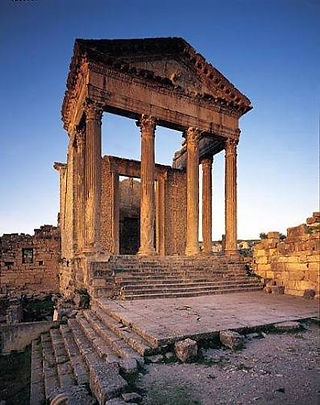


Roman Carthage became a major centre of administration, commerce, agriculture, intellectual life, and Christianity.
Then the political world changed again.
The Vandals captured the city in the 5th century CE and made it the centre of their North African kingdom. Byzantine forces later recovered it. Centuries of transformation continued around it as political systems changed across North Africa and the Mediterranean.
Eventually, Carthage lost the urban importance it had possessed in antiquity.
Other centres grew.
Tunis, nearby, became the city around which political and economic life increasingly organized itself.
Carthage became something different: a landscape containing layers.
Punic.
Roman.
Vandal.
Byzantine.
Modern.
They do not form a single uninterrupted civilization, and they should not be forced into one.
What they reveal instead is how repeatedly the same geography has been inhabited, reorganized, contested, abandoned, reused, excavated, interpreted, and remembered.
The power changed.
The place remained.
What Remains


Some traces of Carthage are monumental.
Others require imagination.
There are Punic burial grounds and archaeological remains associated with the ancient ports. There are fragments of streets and houses. Roman structures rise more visibly across parts of the landscape, including the enormous Antonine Baths overlooking the sea.
Objects recovered through archaeology preserve smaller dimensions of life: ceramics, inscriptions, jewellery, coins, funerary objects, tools, and fragments of architecture.
Together, they reconstruct only part of what once existed.
Much has been destroyed.
Much remains underground.
Much was carried elsewhere.
And some things cannot be recovered at all.
A city is more than its buildings. The sound of its streets, the relationships between neighbours, everyday conversations, smells from workshops and kitchens, arguments in markets, movements through its harbours, and countless ordinary routines leave little archaeological trace.
This is one of the strange realities of standing among ruins.
The stones survived people whose lives were once more immediate than the stones.
Who Gets to Remember Carthage?


There is another difficulty in understanding Carthage.
Much of its story reaches us through people who were not Carthaginian.
Greek and Roman writers produced accounts that became fundamental sources for later historians.
Rome, the civilization that ultimately defeated Carthage, left an enormous literary tradition.
Carthage did not leave an equivalent surviving archive.
Punic inscriptions survive. Archaeology provides extensive evidence. Material culture continues to reshape what can be understood about the city and the wider Punic world.
But much of Carthage's own voice has been lost.
That imbalance matters.
It means that Carthage is not only a story about power and destruction. It is also a story about documentation.
Who leaves the archive?
Whose description survives?
What happens when later generations know a civilization partly through the writings of its rivals?
These questions extend far beyond Carthage.
Places are constantly interpreted by outsiders: travellers, historians, governments, archaeologists, journalists, collectors, museums, and institutions. Their work can preserve extraordinary knowledge. It can also influence which parts of a place become visible and how those parts are understood.
Carthage reminds us that telling the story of a place is itself a form of stewardship.
Sometimes what disappears first is not the place.
It is the ability of its people to describe it in their own words.
Carthage Is Not Nostalgia

Carthage does not need to prove that modern Tunisia is powerful.
It does not need to become a metaphor for national greatness, and contemporary Tunisia does not need to pretend to be the uninterrupted continuation of an ancient empire.
The reality is more interesting.
Carthage belongs to the extraordinary accumulation of histories held within the territory of Tunisia today.
Its presence complicates simple ideas about centre and periphery, Africa and Europe, origin and influence, destruction and survival.
It also resists the tendency to imagine Tunisia primarily through its modern scale.
The borders are modern.
The geography is not.
For thousands of years, communities living along this coast have participated in worlds extending far beyond it. People arrived, departed, traded, conquered, settled, adapted, built, destroyed, and built again.
Carthage is one layer within that much longer story.
A particularly powerful one.
But not the only one.
Living Beside Carthage

Perhaps the strangest thing about Carthage is how ordinary its presence can become.
It is possible to arrive by suburban train.
People live nearby. Cars pass archaeological sites. Houses overlook ancient ground. Trees grow beside columns. The sea continues behind everything.
Modern life has not stopped because history happened here.
It accumulated around it.
That relationship may be more revealing than any attempt to turn Carthage into a monument to vanished greatness.
Carthage is not sealed away from Tunisia.
It sits within it.
The ancient city survives unevenly: in excavated foundations, museum collections, place names, scholarship, fragments of Punic language, Roman architecture, and the physical landscape itself.
None of these things restores the city that was destroyed.
That is not what survival means.
Places can lose governments, languages, buildings, populations, religions, borders, and entire systems of power while continuing to shape what comes afterward.
Carthage was conquered.
It was destroyed.
It was rebuilt.
It changed civilizations.
It declined.
Its stones were reused.
Its history was scattered across texts, objects, museums, excavations, and competing interpretations.
And more than two thousand years after Rome destroyed Punic Carthage, people still come to this stretch of Tunisian coastline and speak its name.
Power does not always survive as power.
Sometimes it survives as presence.
Frequently Asked Questions
Where is Carthage?
Carthage is located on the Gulf of Tunis in northern Tunisia, northeast of central Tunis. The modern municipality of Carthage contains archaeological sites distributed across a large area rather than one single enclosed ruin.
Was Carthage Phoenician or Tunisian?
Carthage was founded by Phoenician settlers from Tyre in the ninth century BCE and developed into the centre of a distinct Punic civilization rooted in North Africa. Modern Tunisia did not yet exist, but Carthage lies within present-day Tunisia and forms an important part of the country’s archaeological and historical heritage.
Was Hannibal from Carthage?
Yes. Hannibal Barca was a Carthaginian general born in the 3rd century BCE and is best known for his campaign against Rome during the Second Punic War, including his famous crossing of the Alps.
Why did Rome destroy Carthage?
Rome and Carthage fought three major conflicts known as the Punic Wars. During the Third Punic War, Roman forces besieged and captured Carthage. In 146 BCE, the city was destroyed and Carthaginian political independence ended.
Did the Romans really salt Carthage?
The famous story that Romans systematically salted the earth of Carthage so that nothing could grow there is generally regarded as a later legend rather than a securely documented ancient event.
Are the ruins in Carthage Punic or Roman?
Both, although many of the most visually prominent remains are Roman. Punic archaeological remains survive at several sites, while structures such as the Antonine Baths belong to Roman Carthage, which developed centuries after the Punic city's destruction.
What happened to Carthage after the Romans?
Roman Carthage became one of the major cities of the Roman Empire. It later came under Vandal and Byzantine control before gradually losing its former importance as political and urban life in the region changed.
Can you visit Carthage today?
Yes. Carthage is part of modern Greater Tunis, and its archaeological sites can be visited across the area. Because the remains are spread through the modern city, visiting Carthage means moving through a landscape where contemporary life and ancient sites exist beside one another.


