
Hadda Saidani
Sejnane Potter and Sculptor from Tunisia
Hadda Saidani is a potter from Sejnane in northern Tunisia. Her work includes earthenware vessels and sculptural clay forms, among them individually formed human figures.
Working within the wider Sejnane pottery tradition, Hadda draws on knowledge developed and transmitted among women across the region. Her work remains recognisably her own: each figure reflects particular decisions in proportion, facial treatment, surface, and decoration.
Hadda and Her Work


Hadda works with clay through a family practice that public documentation traces to 1942. She continues this knowledge while helping transmit it forward.
Her practice extends across pottery and sculpture. Human figures form one visible direction within that work.
These figures are not anonymous examples of a collective Sejnane style. They are objects made by Hadda, shaped through her own treatment of the body, face, surface, and upright form.
A Family Practice Continued
The pottery tradition of Sejnane is characterised by direct hand-building without a potter’s wheel. Clay is prepared, formed, dried, decorated, and traditionally fired on the ground through an open-firing process.
These shared methods provide a material foundation, but they do not produce identical objects.
Each maker develops her own relationship with:
-
Form
-
Scale
-
Proportion
-
Surface
-
Decoration
-
Function
-
Figurative representation
Hadda works within this wider knowledge while producing objects that carry her individual decisions.
To understand the broader process through another documented Sejnane maker, explore The Village Where Pottery Is Still Made Without a Wheel.
Human Figures and Individual Form


The works currently documented by My Chakchouka include four human figures, each approximately 30 centimetres high.
All four stand independently, but they differ considerably in proportion, modelling, surface, and decoration.
One figure is extensively painted. Its facial features, clothing, joined hands, jewellery-like details, and geometric markings divide the body into distinct areas.
A second has an elongated, restrained form. Earthy cream, ochre, brown, and dark tones move irregularly across its narrow body, allowing material variation to carry much of its visual presence.
The third is also elongated but has a deep black surface, a rounded head, prominent ears, and simplified facial features. Its compact shoulders and narrow cylindrical body create a different relationship between head and form.
The fourth is broader and more explicitly modelled. Its face, breasts, curved arms, and rounded torso remain visible beneath a dark surface, giving the figure a fuller bodily presence.
Together, the four works show that Hadda does not rely on one fixed treatment of the human form. She moves between painted detail, restrained modelling, elongated proportion, rounded volume, earthy tonal variation, and deep monochromatic surfaces.
Surface, Markings, and Fire
The surfaces of Hadda’s documented figures reveal different relationships among clay, decoration, and firing.
Across the first figure, darkened areas and tonal shifts become central to its appearance. Its matte surface remains visibly irregular rather than uniformly coloured.
Across the second, painted markings establish the face, clothing, and bodily divisions more explicitly. Geometric lines sit beside representational details without covering the clay completely.
These features can be described visually, but their meanings should not be assigned without Hadda’s own explanation.
A painted triangle, line, necklace-like form, or facial mark may relate to a wider decorative vocabulary. It may also reflect a decision made for that particular object. Visual resemblance alone does not establish one fixed symbolic meaning.
Within the Sejnane Pottery Tradition
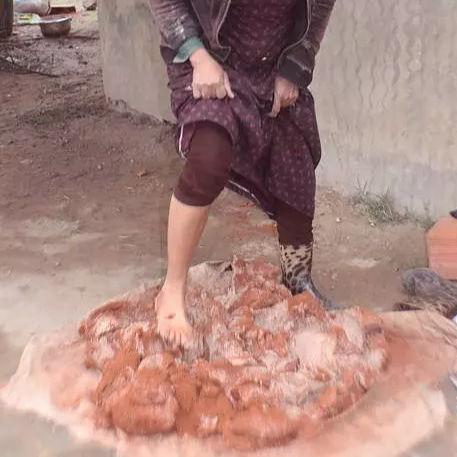


Sejnane pottery developed through women’s knowledge of local clay, hand-building, surface preparation, decoration, drying, and open firing.
Historically, this knowledge supported objects associated with domestic life, including vessels used for cooking, serving, and storage. It also supports dolls, animal forms, human figures, and other sculptural objects.
Hadda’s work belongs within this breadth.
Her figures show how inherited material knowledge can continue through forms made for contemporary display. This does not place them outside the tradition, nor does it make them representative of every Sejnane potter.
Shared knowledge leaves room for different hands.
In 2018, the skills associated with the pottery of the women of Sejnane were inscribed on UNESCO’s Representative List of the Intangible Cultural Heritage of Humanity. The inscription recognised a living practice maintained by its community; it did not certify individual makers or objects.
Explore the materials, methods, uses, and contemporary context of the wider Sejnane pottery tradition.
A Documented Sejnane Potter


Hadda Saidani has appeared in public documentation and cultural projects involving the potters of Sejnane.
She was among the women connected to Laaroussa, a long-running project developed by Tunisian artists Selma and Sofiane Ouissi around the gestures, work, and knowledge of Sejnane potters. Her name remains in the project’s documentation alongside those of many other participating women. Festival d’Avignon documentation
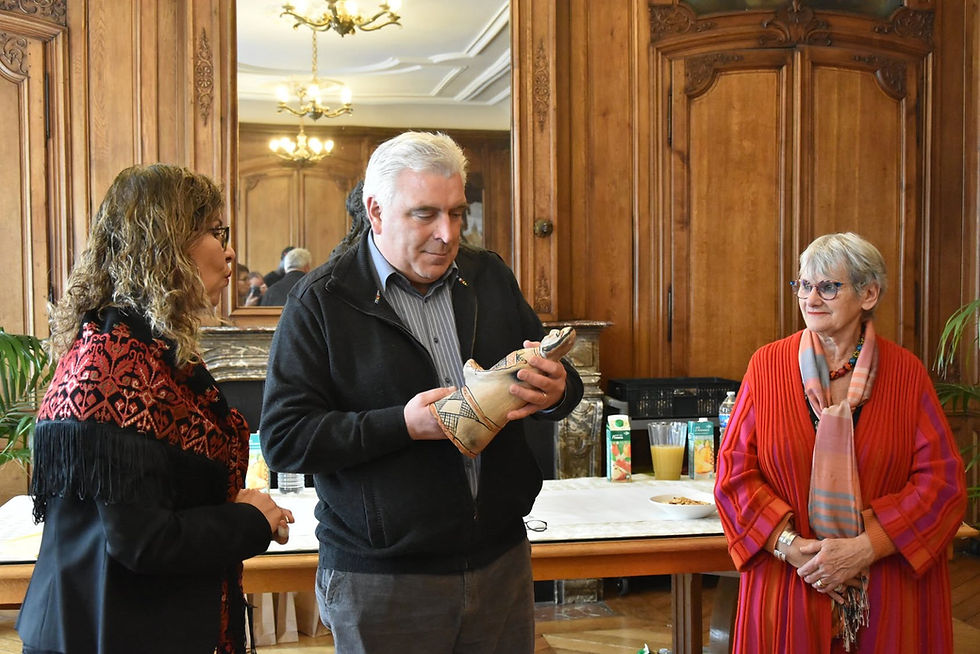
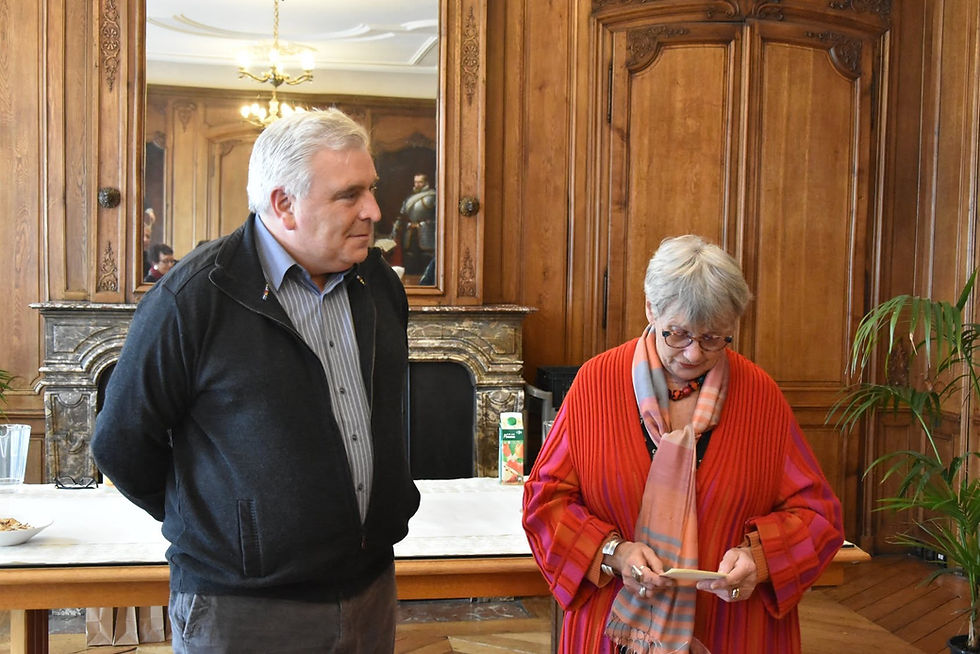
In 2019, Hadda and Sihem Saidani were received in Boulogne-sur-Mer, France, during the Festival des Solidarités. The visit created an opportunity for exchange around the pottery tradition and the work of its makers. City of Boulogne-sur-Mer
These appearances form part of Hadda’s public relationship with the practice. They do not replace the work itself: the objects remain the clearest record of how she handles clay, form, and surface.
Works by Hadda
The works below form the beginning of Hadda Saidani’s documented body of work within My Chakchouka. Their availability may change, but their attribution and object records remain connected to her page.


Continue Exploring
Understand the Tradition
Explore the materials, uses, knowledge, and cultural continuity of Sejnane Pottery.
See the Process
Follow clay through preparation, hand-building, decoration, drying, and open firing in The Village Where Pottery Is Still Made Without a Wheel.
Explore Sejnane Sculptures
Discover available figurative pottery with clear maker attribution and object provenance.
Meet Other Makers
Continue through the Artisans Directory to encounter other people documented within the My Chakchouka ecosystem.