Why Tunisian Honey Feels Different on Your Tongue
- Aya Omrani

- Aug 1, 2025
- 2 min read
Updated: Sep 30, 2025
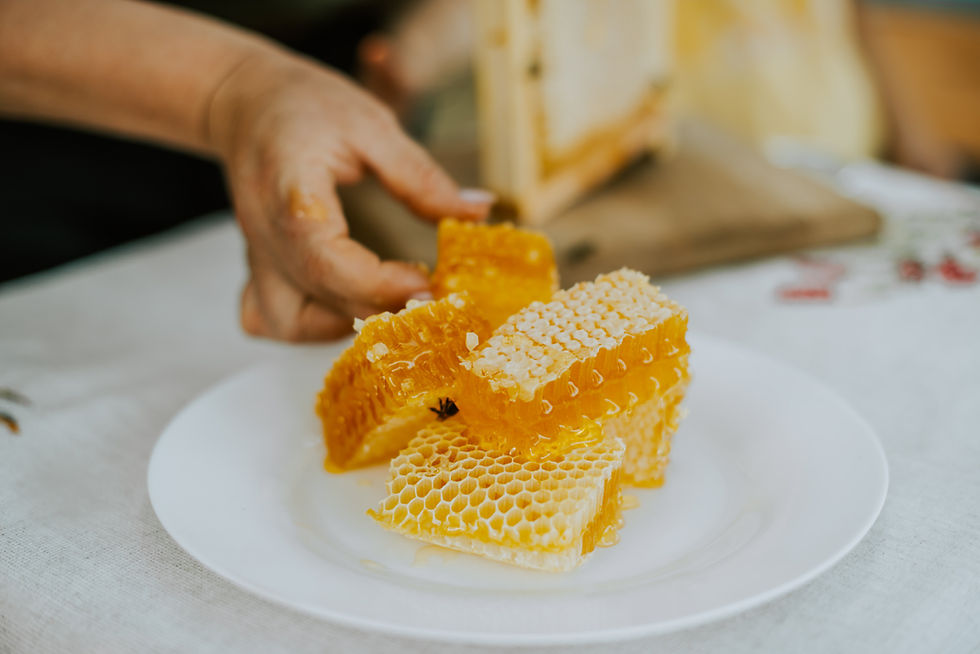
The moment it touches your tongue,
you know.
This isn’t the honey you grew up buying.
It doesn’t dissolve.
It doesn’t slip away.
It settles.
It holds.
And suddenly, you’re paying attention.
Most Honey Is Engineered to Be Forgettable
Shelf honey is built for consistency.
Not for meaning.
Not for traceability.
Not even for use.
To get there, it’s:
Heated
Filtered
Blended
Smoothed
What’s left is sweet, but hollow.
No pollen. No propolis. No rhythm.
Just something that fills the gap until the next bite.
This One Doesn’t Disappear
Tunisian honey wasn’t designed for flow.
It was never meant to squeeze.
It was meant to stay.
It moves like earth, not syrup.
You feel it before you taste it.
And when it lands, it lands with weight.
That resistance? That density?
It’s not a flaw.
It’s what happens when the honey still remembers where it came from.
What You’re Feeling Is the Land, Unbroken
Our beekeepers don’t follow quotas.
They follow blooms.
They wait. They move. They harvest when the flowers have finished speaking.
That means:
No standardization
No industrial schedule
No blending to hit a number
Every pot comes from one place. One moment. One rhythm.
And you can feel it.
The taste is deeper.
But the weight is what stays.
Your Body Recognizes What It Was Missing
When you taste it, you may not have the words.
But your mouth knows.
Your body knows.
Because this is honey that still holds:
Its minerals
Its plant identity
Its natural medicinal function
It’s not a garnish.
It’s a tool.
This Is Why We Refuse to Change It
We don’t heat.
We don’t filter.
We don’t redesign.
We carry it from region to jar, with no interruption.
So when it hits your tongue and doesn’t behave like you expect…
That’s the point.


Comments