Tunisian Tea: The Pause That Holds a Country
Updated: Nov 15, 2025
(and why it’s often served with pine nuts)
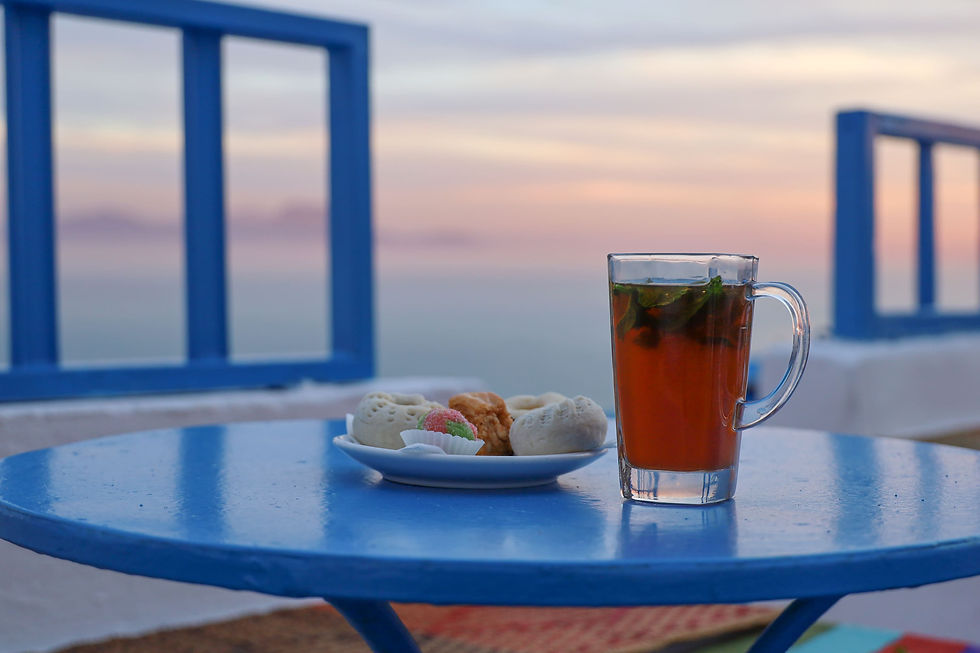
In Tunisia, tea isn’t a beverage. It’s a pause; warm, fragrant, and deliberate. You’ll find it poured in homes, cafés, and workshops; between conversation and silence; at the end of meals and the beginning of friendships.
And in that glass, a few pine nuts float like punctuation marks. Small, golden, and essential.
The Tunisian Way of Tea
Across North Africa, mint tea is a shared ritual. But Tunisia’s version carries its own signature: balance. It’s sweet enough to soothe, never so sweet that sugar hides the tea.
What it’s made of
Green tea (often gunpowder style)
Fresh mint, or sometimes rose-geranium leaves in winter
Sugar, added until the edge softens
Pine nuts, lightly toasted, slipped into the glass before serving
How it’s prepared
Water is brought to a boil. Tea and sugar are added, left to simmer briefly. Mint joins just long enough to release its oils. Then the tea is poured from height into simple glass tumblers.
The scent is clean. The taste is rounded. The feeling is Tunisian.
Why Do Tunisians Drink Tea with Pine Nuts?
Taste and texture
Pine nuts, or pignons, bring warmth to freshness. They add a subtle nuttiness that deepens each sip. As they soften in the hot tea, they release their oils; a quiet richness that lingers after the last mouthful.
Gesture of hospitality
Adding pine nuts turns ordinary tea into a welcome. It costs more, takes thought, and says: you are our guest. In cafés, ordering thé aux pignons feels like a small celebration. At home, it’s a way to honour whoever is sitting across from you.
Cultural distinction
Other Maghrebi teas lean sweeter or heavier on mint. Tunisia’s is poised; fragrant, balanced, quietly elegant. The pine nuts make that identity visible. They mark the line between habit and ceremony.
How to Make Tunisian-Style Tea
For four glasses
5 cups (≈ 1.2 L) water
3 Tbsp gunpowder green tea
3–4 Tbsp sugar (to taste)
A large handful of fresh mint
1 Tbsp pine nuts per glass
Method
Boil the water.
Add tea and sugar; simmer 1–2 minutes.
Add mint, remove from heat, and steep ≈ 5 minutes.
Toast pine nuts in a dry pan until golden.
Place the nuts in each glass and pour tea from height.
Serve immediately. The first sip should feel bright; the last, round and comforting.
Bring that same spirit home with our For Table Collection; Tunisian objects built for shared moments and daily rituals.
The Meaning Behind the Cup
Tea with pine nuts is how Tunisians make time visible. It slows the pace, anchors the moment, and turns company into communion.
Each element carries its message:
Mint = freshness and clarity.
Tea = focus and presence.
Sugar = warmth without excess.
Pine nuts = generosity and belonging.
Together, they express the Tunisian ideal: balance between heart and restraint.
Quick Answers
Is Tunisian tea sweet?
A little – enough to soften the edge of the green tea, not enough to hide it.
Are pine nuts essential?
Optional, but meaningful. Almonds or roasted peanuts may substitute, yet pine nuts remain the symbol of hospitality.
Why do they float?
Their oils and density shift with sugar level – a playful natural indicator of sweetness.
The Tunisian Pause
Every culture has a way to pause. Tunisia chose tea.
A glass with mint and pine nuts holds more than flavor: it holds rhythm, dignity, and warmth.
So next time you serve it, at home, in a café, or by the sea, watch the pine nuts drift and settle. That’s the country, in miniature: grounded, generous, balanced.
Learn more about How We Work : the fair systems and rhythms behind everything we make.


