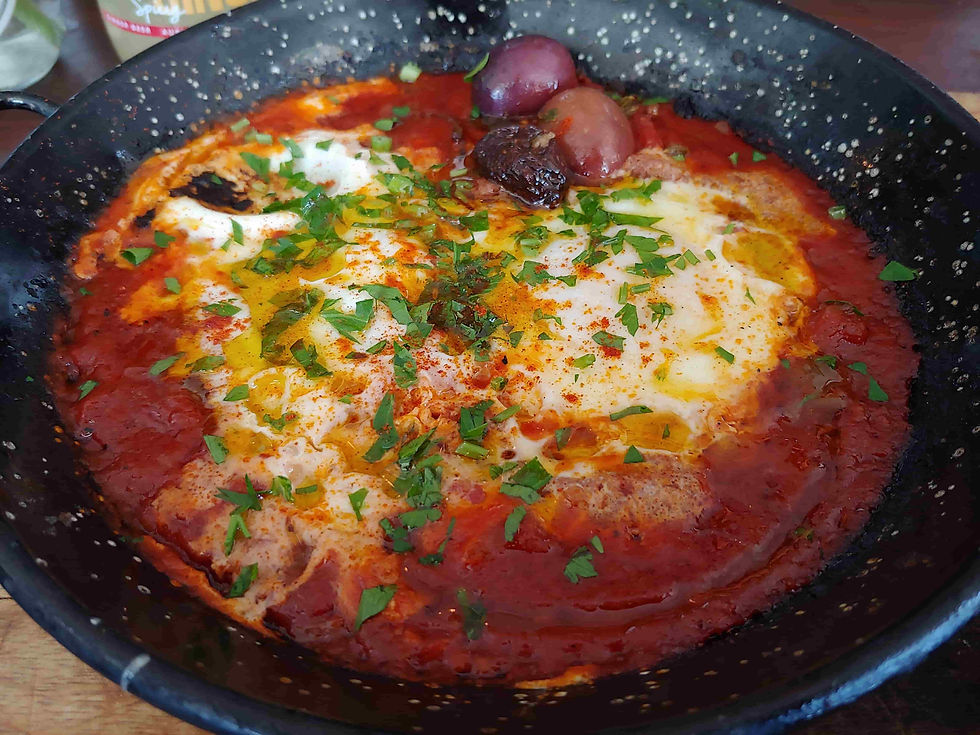
Shakshouka: A Common Spelling of Chakchouka / Shakshuka
- Feb 8
- 2 min read
Updated: Feb 11

The word shakshouka appears on menus, blogs, and search engines around the world.
It refers to the same North African dish more widely known today as shakshuka or chakchouka.
This page explains what shakshouka means, why this spelling exists, and how it connects to the dish’s documented origins — clearly, calmly, and without confusion.
What Does “Shakshouka” Mean?
Shakshouka is a spelling variant of chakchouka, a word from Maghrebi Arabic meaning a mixture or something shaken together.
The name describes both:
the method of cooking — ingredients brought together in one pan
and the dish itself — a mixed base of tomatoes, peppers, olive oil, and spices
Different spellings emerged as the word moved between Arabic, French, and English.
No single Latin spelling was ever fixed.
Chakchouka, Shakshuka, Shakshouka — What’s the Difference?
They are the same dish, written differently.
Chakchouka — common in French and North African contexts
Shakshuka — dominant English spelling today
Shakshouka — an alternative transliteration still widely used online
These differences come from transliteration paths, not from changes to the dish itself.
For a full breakdown of spelling logic, see: Chakchouka vs Shakshuka
Where the Dish Comes From (Documented)
Historical and linguistic evidence places the origins of chakchouka in North Africa, with Tunisia and western Libya most strongly supported.
By the 19th century, households in the region were cooking tomato-based mixtures using:
olive oil
peppers
garlic and onions
cumin and related spices
Eggs were sometimes added, sometimes not — depending on availability and context.
A detailed evidence review is available here: Origin of Shakshuka
How the Dish Spread
Like many everyday foods, chakchouka travelled with people.
During the mid-20th century, Jewish families from Tunisia and the wider Maghreb carried the dish with them to:
Israel
France
later, North America and Europe
In Israel, the dish became widely visible through restaurants and media, where the English spelling shakshuka took hold.
This process reflects adoption through migration, not a change in origin.
For a neutral explanation of this transition, see: Shakshuka migration and modern identity
Tunisian Characteristics (Context, Not Exclusivity)
In Tunisia, chakchouka is part of a broader family of tomato-and-egg dishes.
Common features include:
the use of harissa for depth and heat
generous olive oil
flexibility around eggs (optional, not defining)
It is eaten at any time of day, often directly from the pan, with bread.
Related Tunisian dishes, such as ojja, follow similar principles but form their own distinct category.
What Shakshouka Is Not
To avoid confusion:
Not menemen — Turkish dish with scrambled eggs
Not Turkish şakşuka — an eggplant mezze, no eggs
Not chakhchoukha — a separate North African dish involving bread and sauce
Each has its own history and structure.
Where to Go Next
For readers looking for reference-grade clarity:
Canonical definition & sources: Chakchouka Shakshuka
How it’s cooked (technique, not recipes): How Shakshuka is cooked
Nutrition & health context: Shakshuka nutrition explained
Summary
Shakshouka is a valid and widely used spelling for a dish whose roots lie in North Africa.
Its many names reflect migration and language, not competing origins.
Understanding that distinction allows the dish to be discussed accurately — and without distortion.