What Is Fricassé?
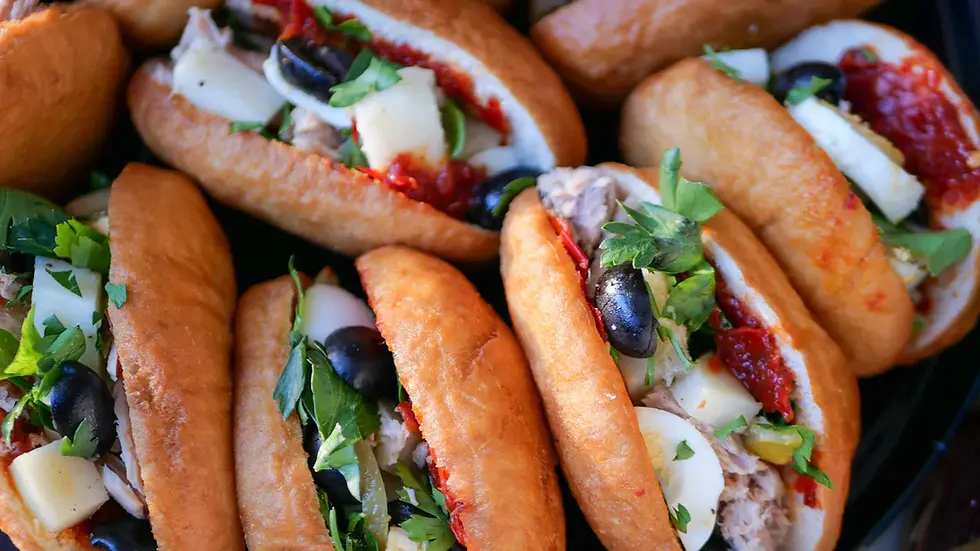
Fricassé is a Tunisian sandwich made with fried dough, filled with tuna, egg, potatoes, olives, and harissa.
It’s soft inside, lightly crisp outside, and assembled after frying.
You’ll find it in bakeries, cafés, and small food counters across Tunisia.
A simple guide
What defines a fricassé


A fricassé follows a different structure from grilled sandwiches.
It begins with fried bread, not baked or pressed.
Then it’s opened and filled.
Inside, you usually find:
tuna
boiled egg
potatoes
olives
The combination is consistent across most places.
Small variations exist, but the core structure stays the same.
How it’s prepared

Fricassé is prepared in two steps:
First, the dough is fried until it becomes:
golden on the outside
soft inside
Then it’s opened and filled by hand.
There is no pressing or reheating after assembly.
This is what gives it its texture:
soft and slightly dense
not melted or sealed
Where you find it
Fricassé appears in places where food is made continuously:
Street food counters & small snack shops (most authentic)
Casual restaurants & neighborhood spots
Dedicated sandwich / fast-food spots
It’s often prepared in batches and filled as needed.
You’ll see it alongside other simple, direct foods.
To understand how this connects to ingredients and land, you can explore land & kitchen in Tunisia, and how it fits daily patterns through rhythm of life in Tunisia.
How it’s eaten


Fricassé is eaten:
warm or at room temperature
by hand
often as a quick meal
It’s not tied to a specific time.
You might eat it in the morning, midday, or later.
It adapts to the rhythm of the day.
Fricassé in context

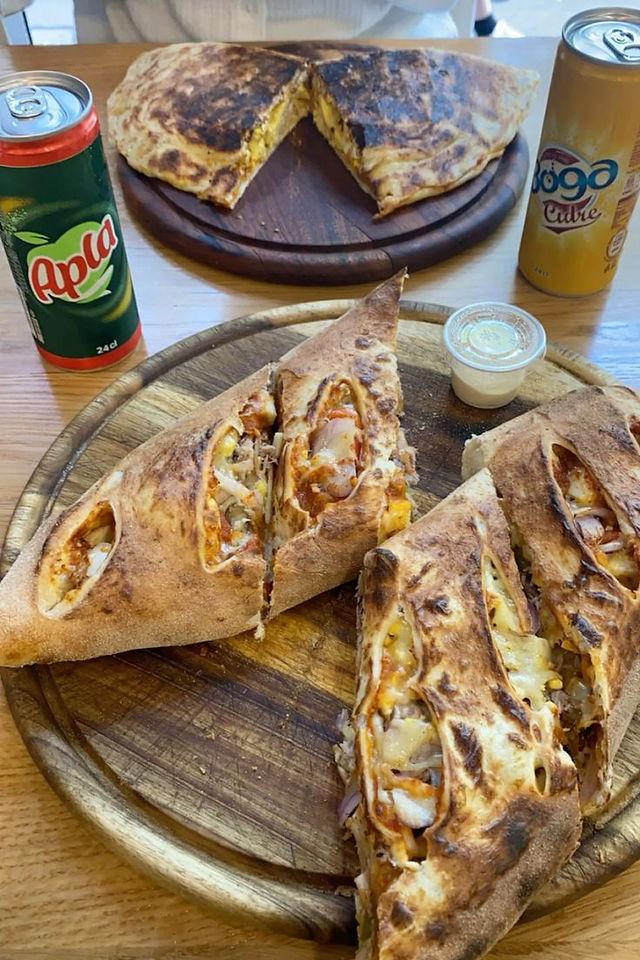

Fricassé is part of a wider group of sandwiches in Tunisia.
Each one follows a different preparation logic.
For example:
makloub → folded and pressed on a grill
baguette farcie → longer, layered, sealed
Fricassé stands apart because:
the bread is fried first
the filling is added after
the structure stays soft
If you want to understand what goes into these foods, you can explore Pantry.
To understand the objects around them, you can move through Kitchen & Table.
Why it works
Fricassé works through contrast:
fried exterior and soft interior
dense bread and simple fillings
familiar ingredients arranged in a stable structure
It doesn’t rely on heat after assembly.
The balance is already built into the bread and filling.
If you order one
You don’t need to customize much.
The standard combination is already defined.
You might adjust:
the level of harissa
small variations depending on the place
Most of the time, you take it as it is.
Fricassé in everyday food
Fricassé is part of everyday food in Tunisia.
It reflects a way of preparing and assembling meals that prioritizes simplicity, availability, and continuity.
As you encounter more foods, these patterns become easier to recognize.


