Hidden Gems of Tunisia: Places Off the Tourist Trail
- Safouane Ben Haj Ali

- Oct 7, 2025
- 3 min read
Updated: Oct 8, 2025
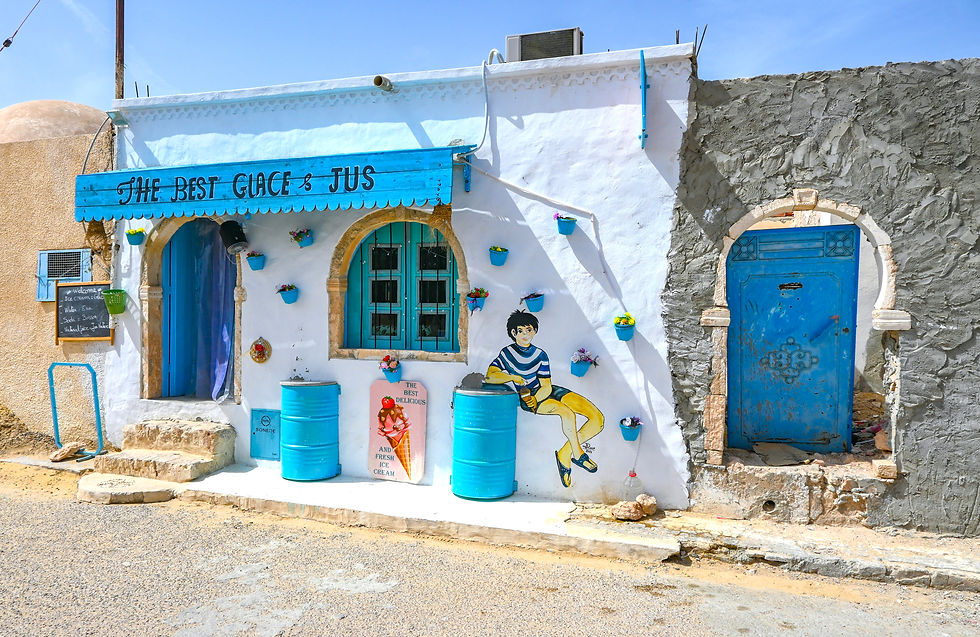
Most travelers know Tunisia for its beaches, mosaics, and blue doors. But between the desert and the sea, there’s another Tunisia, quiet, raw, and deeply human.
These are the places where time slows, and the country’s beauty hides in plain sight.
Explore the hidden regions:
The Berber Villages of the South
Tucked into Tunisia’s southern mountains, villages like Chenini and Douiret feel like they were carved from the earth itself. Built into cliffs, their homes blend perfectly with the stone, creating natural fortresses that once protected Amazigh (Berber) communities. Walk the paths between granaries and caves, and you’ll find families still living as their ancestors did — with simple tools, shared work, and open hospitality.
To reach them, drive from Tataouine (2 hours from Djerba). The landscape shifts from sand to rock, and silence takes over.
Sejnane: Land of Women and Clay

North of Bizerte, Sejnane is a small hill town known for pottery made only by women. Their technique — shaping by hand without a wheel — dates back thousands of years. Each piece dries under the sun, then hardens in open fires of grass and wood. The result: simple, sculptural forms that hold stories of continuity.
UNESCO now lists Sejnane pottery as Intangible Cultural Heritage, but it’s still a living village. Visitors can meet the women directly, buy their work, and witness the slow rhythm of creation.
The Salt Lakes and Flamingos of Chott el Jerid
Between Tozeur and Douz lies Chott el Jerid, a vast salt lake shimmering with mirages. In winter, the shallow waters reflect the sky; in summer, the cracked surface turns pink and gold. Flamingos arrive during migration, and the stillness feels otherworldly.
Many travelers pass by quickly on their way to the Sahara, but this is a place to stop. Even a short walk on the salt crust changes your sense of distance and sound.
The Forests of Ain Draham
In the northwest, Ain Draham hides under a canopy of oak and pine. It’s Tunisia’s greenest region; cool, humid, and covered in mist. The town was once a French hill station; today, it’s a base for hiking, foraging, and quiet retreats.
Local families rent cabins or guesthouses, often serving wild mushrooms and chestnuts in autumn. Few international tourists make it here, but Tunisians know it as a place to breathe.
Cap Serrat and the Wild North Coast
If you drive west from Bizerte, the coastline turns wilder with every curve. Cap Serrat is one of Tunisia’s most untouched beaches — a long stretch of sand between mountains and sea, with only fishermen’s huts nearby.
The road is rough, but the reward is solitude. You can swim, walk for hours, and see nothing but nature. Bring what you need; there are no cafés or umbrellas here — only the sound of waves.
Teboursouk and Dougga at Golden Hour
Dougga — a UNESCO World Heritage Site — is one of Tunisia’s best-preserved Roman cities, yet still feels hidden because it’s surrounded by olive groves, not highways. The nearby town of Teboursouk offers homestays where visitors can experience local cooking and rural life. If you visit, try the region’s olive oil — rich, green, and known for its pure Chétoui flavor, best tasted simply with bread.
Come late afternoon, when sunlight turns the ruins gold and farmers return from the fields. It’s the quiet side of Tunisia’s grandeur.
FAQ
What’s the best way to reach these hidden places?
Rent a car or use louages (shared taxis). Public transport can be limited in rural areas. you can read more in our Transport in Tunisia Guide.
Are these places safe to visit?
Yes. They are calm, community-based areas. Always check local advice before traveling to border zones. For a full overview, see Is Tunisia Safe for Tourists in 2025?
Can you visit without a guide?
Most can be explored alone, though local guides enrich the experience, especially in the south.
When is the best time to explore Tunisia’s offbeat regions?
Spring (March–May) and autumn (September–November) offer mild weather and clear skies, ideal for road trips and photography. Learn more in Best Time to Visit Tunisia
What should I bring?
Sun protection, cash (ATMs are rare), and an open mind — most places have no tourist infrastructure.


Comments