Olive Wood Movement and Thickness Decisions
Updated: Feb 28
Part of the Mediterranean Object Logic framework.
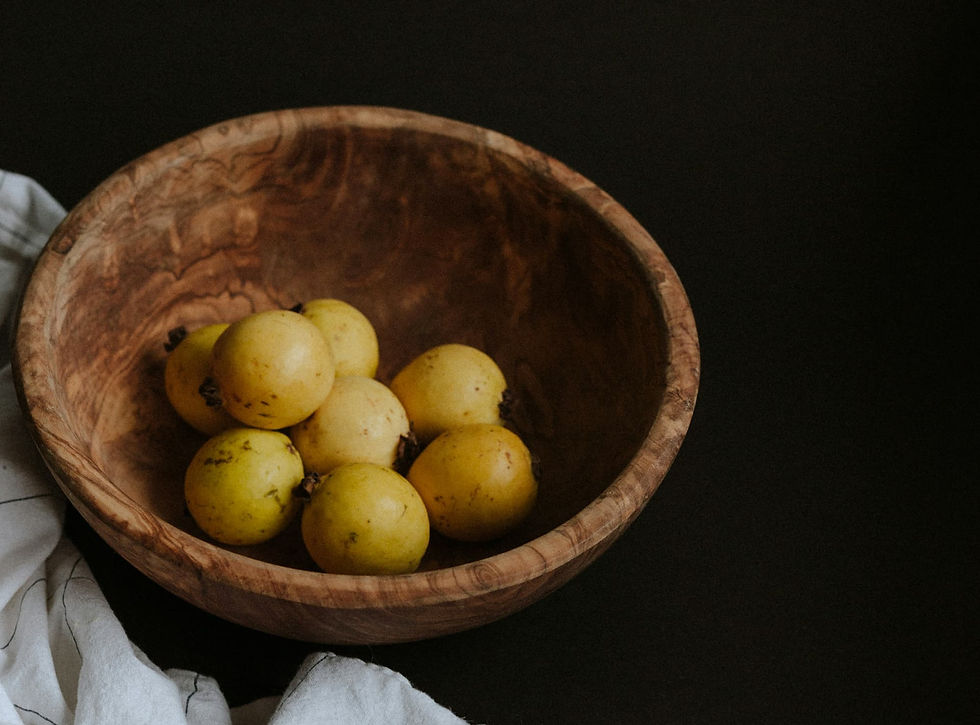
Olive wood persists because thickness decisions compensate for material movement.
Wood expands.
Wood contracts.
Wood twists under uneven stress.
Durability emerges when form anticipates this behavior.
Material logic is not about appearance.
It is about managing predictable movement.
Humidity Expansion and Contraction
Mediterranean regions combine:
Coastal moisture
Inland dryness
Seasonal variation
Olive wood responds to humidity changes by:
Expanding across the grain
Contracting as moisture decreases
This movement is normal.
Failure occurs when form does not accommodate it.
Thin wood sections:
Warp faster
Crack at stress points
Distort under uneven drying
Stability increases with proportion and grain awareness.
This seasonal movement pressure is part of:
Grain Direction as Structural Logic
Olive wood has dense, irregular grain.
This produces:
High compression strength
Visual variation
Uneven internal tension
Durable objects align form with grain direction.
Examples:
Handles follow longitudinal grain
Bowls maintain thickness through curved transitions
Edges avoid sharp internal corners
Grain is not decorative.
It is structural.
Thickness as Movement Insurance
Unlike mineral materials, wood must breathe.
Thickness reduces:
Rapid moisture penetration
Surface cracking
Tension concentration
A thicker cross-section:
Slows moisture exchange
Reduces deformation speed
Distributes internal stress
This thickness logic parallels mineral thickness under heat load and cycling.
The same performance margin appears in:
Oil Finishing and Surface Stability
Olive wood is often finished with natural oils.
Oil:
Slows moisture transfer
Reduces surface drying
Maintains flexibility
It does not eliminate movement.
It moderates it.
Maintenance rhythm becomes part of structural continuity.
This continuity mechanism becomes explicit in:
Failure Thresholds in Thin Forms
Thin wooden objects fail faster because:
Humidity stress concentrates at edges
Minor cracks propagate quickly
Impact resistance decreases
Under long replacement cycles, thin forms rarely persist.
This structural margin principle is explored in:
Economic replacement pressure is detailed in:
Tunisia as Reference
Tunisia combines:
Coastal humidity
Inland dryness
Strong sunlight
Long object use cycles
Olive wood survives because:
Proportion compensates for movement
Grain alignment is respected
Maintenance is normalized
Durability results from structural awareness.
Structural Outcome
Olive wood persists when:
Movement
→ is anticipated
→ thickness absorbs stress
→ grain guides form
→ maintenance stabilizes surface
Material logic aligns behavior with proportion.


