The Atlas Dog (Aïdi): Tunisia's Guardian at the Edge of the Wild

In the grazing landscapes of North Africa, a dog waits where the flock ends and the open land begins.
The sheep lower their heads to feed. The dog watches.
Its attention is fixed not on the animals behind it, but on everything beyond them: the hillside, the distant path, the movement that may or may not appear on the horizon. While the flock grazes, the guardian remains alert.
It does not move the animals. It does not fetch, chase, or entertain. Instead, it watches.
You might find it standing on a rocky rise above a pasture, resting near the entrance to a rural household, or positioned at the edge of a grazing area where cultivated land gives way to open country. Wherever it appears, the pattern is similar. The dog occupies the boundary.
It stands between what belongs to the household and what lies beyond it.
At first glance, it is simply a dog watching a flock. Yet almost everything about its role differs from the way many people think about dogs today. Its purpose is not companionship, obedience, or recreation. It exists because certain landscapes create certain responsibilities.
This dog is known as the Atlas Dog, or Aïdi.
For generations, guardian dogs like the Aïdi have accompanied pastoral communities across the mountain and upland regions of North Africa. Their task is straightforward but demanding: to remain vigilant where vulnerability begins. They guard livestock, households, and camps, often spending their lives at the edges of settlements rather than at their centre.
The Atlas Dog is often introduced as a breed. But before understanding the dog, it helps to understand the world that made it necessary.
Quick guide
A world of flocks, distance, and exposure


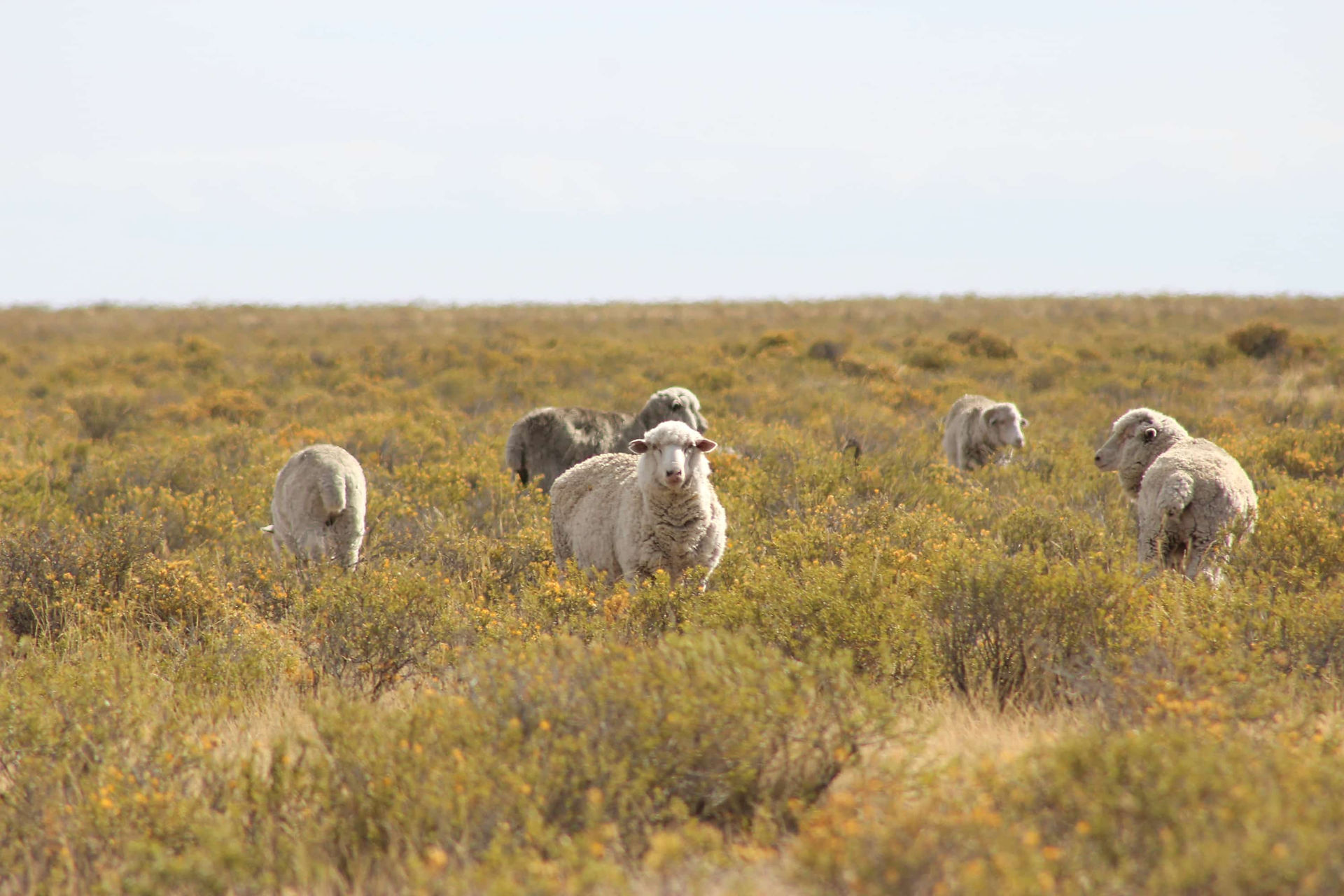
To understand why the Atlas Dog exists, it helps to imagine the world in which it works.
In many mountain and upland regions of North Africa, a flock may leave the household in the morning and spend the day moving across hillsides, grazing land, and open terrain. By afternoon, the animals may be scattered across a landscape much larger than the space immediately surrounding the home. The distance between household and flock becomes part of daily life.
So does exposure.
In open country, vulnerability is often visible. A movement on a distant hillside. An unfamiliar presence near grazing land. Something approaching from beyond sight. In such environments, awareness matters because problems are often detected long before they arrive.
This is a world where vulnerability is rarely hidden.
The same openness that allows animals to graze also creates responsibility. A family may not see the flock for hours, yet its wellbeing remains part of the day's concerns. A household may sit near its fields and pastures while remaining connected to a much larger landscape beyond its walls. The boundary between settlement and open land is not difficult to imagine. It can often be seen from a doorway, a hillside, or the edge of a grazing area.
These realities have shaped pastoral communities across the wider Atlas region for generations. They also remain familiar in parts of Tunisia's rural and upland landscapes, where livestock, agriculture, and open country continue to influence everyday life.
In such places, responsibility extends beyond the household itself. Animals must be watched. Boundaries must be maintained. Vulnerabilities must be anticipated before they become problems.
The Atlas Dog emerged from this environment because the environment demanded it.
Before it became a breed, it was a solution.
Why such dogs exist
A flock grazing on an exposed hillside cannot rely on constant supervision.
The animals may spend hours moving across open terrain, often beyond the immediate reach of the household. A family may still know where the flock is, but knowing is not the same as being present.
Yet responsibility remains.
While the flock grazes, its wellbeing continues to matter. A movement on a distant ridge, an unfamiliar presence near grazing land, or a disturbance among the animals may be noticed long before anyone from the household could arrive. In open landscapes, awareness often matters more than reaction.
This creates a practical problem.
Someone—or something—must occupy the space between the flock and the wider landscape.
That space rarely remains empty for long.
In pastoral environments, it is often occupied by a guardian.
Its role is not simply to respond when danger appears. Its role is to remain present before danger appears. By watching, patrolling, and signalling its presence, a guardian helps reduce vulnerability long before direct confrontation becomes necessary.
In many ways, the Atlas Dog emerged to occupy a position that people could not continuously occupy themselves.
It remained present when people could not.
The Atlas Dog was one answer to that reality.
What is the Atlas Dog?

The guardian standing at the edge of the flock has a name.
It is known as the Atlas Dog, or Aïdi.
Across the mountain and upland regions of North Africa, pastoral communities developed alongside livestock, open landscapes, and the responsibilities that came with them. The guardian we have been following throughout this article emerged from that world.
The Aïdi is often described as a livestock guardian dog. That distinction matters.
Despite occasionally being referred to as an "Atlas Sheepdog," the breed was not primarily developed to move animals from one place to another. Its purpose was protection. While herding dogs guide a flock's movement, guardian dogs remain responsible for the flock itself.
One manages movement.
The other guards what has already been gathered.
This distinction helps explain why the Atlas Dog developed the way it did. A guardian watching over livestock in open landscapes cannot depend on constant instruction whenever conditions change beyond the horizon. It must remain alert. It must observe. It must make decisions.
The same principle shaped the dog's physical presence. Its sturdy build, protective coat, and endurance emerged because they were useful. In the world that produced the Aïdi, appearance followed function.
Today, the breed is most strongly associated with Morocco, but it can also be found elsewhere across North Africa, including parts of Tunisia where similar pastoral realities continue to exist.
This is why the Atlas Dog is best understood not as a breed defined by measurements or standards, but as a guardian defined by a role.
It was created to guard.
And to understand what that responsibility looks like in practice, it helps to return to the place where the Atlas Dog is most often found: at the edge of the flock, watching the landscape beyond.
The guardian at the edge

A flock grazes across an open hillside.
The animals lower their heads to feed, moving gradually through the landscape. Nearby, the dog watches.
At some point, it lifts its head.
Perhaps it has noticed movement on a distant ridge. Perhaps it has heard something the flock has not. The sheep continue grazing. Nothing changes. After a moment, the dog settles again and resumes its watch.
This vigilance is easy to overlook because it often produces no visible result.
That is precisely the point.
People often imagine protection as a response to danger. A threat appears, action follows, and a protector intervenes. Yet much of a livestock guardian's work happens long before confrontation becomes necessary.
The dog occupies the space between the flock and the wider landscape.
Its presence alone changes that space.
Anything approaching the animals encounters the dog first. The flock is no longer unattended. The boundary between what is protected and what is not becomes visible.
Because of this, many threats never become confrontations at all.
The flock continues grazing. The household continues its day. Nothing dramatic happens because the dog is already there.
The best day for a guardian is often the day when nothing happens at all.
The Atlas Dog was not created to spend its days fighting threats. It was created to remain aware of them. Watching, observing, and maintaining a visible presence are not secondary parts of the role. They are the role.
Its responsibility begins where the flock ends.
Trust rather than control
The relationship between a guardian dog and the people who depend on it is not built entirely on instruction.
It cannot be.
A flock may spend hours beyond the immediate reach of the household. The guardian remains with the animals. The people responsible for them do not. Distance becomes part of the relationship.
This helps explain why Atlas Dogs are often described as independent.
Independence, however, is not the best place to begin.
Responsibility is.
A livestock guardian is expected to notice things others do not. It must remain attentive when the landscape appears quiet. It must respond to changes that occur beyond the immediate reach of the household. Waiting for instructions is not always possible because the situation requiring attention may emerge before instructions can arrive.
In this sense, the Atlas Dog was not expected to follow every instruction. It was expected to recognize when no instruction was available.
Trust emerges from that reality.
A household may not be able to see the flock at every moment, yet responsibility for the animals remains. The guardian occupies the space between the flock and the wider landscape, carrying out a role that cannot be continuously supervised. Much of its work depends on awareness, judgment, and presence rather than direct instruction.
The relationship becomes less about controlling every action and more about trusting the dog to fulfil its responsibility.
This does not make the Atlas Dog less connected to people. If anything, it reveals a different kind of connection.
The guardian watches the flock. The household trusts the guardian. Each depends on the other.
In many ways, this relationship reflects the wider realities that shaped the breed. Distance, exposure, and responsibility do not disappear simply because people would prefer certainty.
Trust was not the starting point.
It was the result.
A life lived at the threshold
Throughout this article, the Atlas Dog has appeared in a remarkably consistent position.
The flock grazes on one side.
The household lies on the other.
Beyond both stretches the wider landscape.
And between them stands the dog.
Not at the centre of the flock.
Not deep within the household.
Not far beyond the grazing land.
At the edge.
This position appears so often that it is easy to overlook. Yet much of the Atlas Dog's role begins here. The guardian remains close enough to what it protects while keeping its attention fixed on what lies beyond it.
One eye on the flock.
One eye on the landscape.
Over time, a pattern emerges.
The dog occupies the space where different realities meet: household and hillside, settlement and open country, protection and exposure.
The threshold is a reality before it becomes a metaphor.
It exists wherever a flock moves beyond the immediate reach of the household. It exists wherever a guardian remains attentive to a landscape that cannot be completely controlled.
In many ways, the dog exists because the boundary exists.
Without the distance between household and flock, there is no need for a guardian. Without the meeting point between protection and exposure, there is no role to occupy.
The Atlas Dog did not become associated with the edge because people imagined a meaning there.
It became associated with the edge because that is where the work is.
That is where responsibility begins to extend beyond immediate reach.
That is where the guardian belongs.
What the Atlas Dog reveals about Tunisia
The Atlas Dog helps make visible a relationship with landscape that can still be found in parts of rural Tunisia today.
The guardian's role only makes sense in landscapes where certain boundaries remain visible.
The distance between household and flock.
The transition between settlement and open country.
The responsibilities that extend beyond the walls of the home.
Throughout parts of Tunisia's rural and upland regions, these relationships can still be encountered in everyday life. Livestock move through grazing landscapes. Rural households remain connected to land, animals, and seasonal rhythms. The spaces between settlement and open country remain part of the lived environment rather than something encountered only from a distance.
The Atlas Dog emerged from these realities.
The dog only makes sense because those connections exist.
This is one reason the Atlas Dog can offer an unusual perspective on Tunisia.
Many visitors encounter the country through its cities, archaeological sites, beaches, markets, or institutions. The guardian points toward a different reality: one shaped by grazing land, rural households, agricultural rhythms, and responsibilities that extend beyond the immediate boundaries of the home.
Standing beside a flock, the Atlas Dog occupies a position that has appeared throughout this article.
One eye on the flock.
One eye on the landscape.
The household behind it.
The wider country beyond it.
The guardian remains where these realities meet.
And from that position, it becomes easier to see the world that produced it.
Many of the same themes explored here—boundaries, transitions, and overlapping realities—also appear in Tunisia itself. See also: The Threshold Country: Why Tunisia Is the Bridge Between Worlds
The dog at the door
Near a gate, beside an entrance, or at the edge of a property, the Atlas Dog can often be found in a familiar position.
The flock beyond.
The household behind.
The landscape stretching further still.
And between them stands the guardian.
By this point, the position no longer seems unusual. It follows naturally from the world that produced it.
The Atlas Dog emerged from landscapes where livestock moved beyond the immediate reach of the household, where responsibility extended beyond walls and fences, and where someone—or something—needed to remain attentive at the boundary between protection and exposure.
That world has not entirely disappeared.
And neither has the role.
The Atlas Dog remains at the threshold because the threshold remains.
Similar everyday relationships between people, animals, and landscape can also be seen in Tunisia's famous terrace cats and in wildlife such as the fennec fox.
Atlas Dog (Aïdi) at a glance
What is the Atlas Dog?
The Atlas Dog, also known as the Aïdi, is a North African livestock guardian dog traditionally associated with the Atlas Mountains and surrounding pastoral regions.
Is the Atlas Dog native to Tunisia?
The breed is most strongly associated with Morocco but is also found elsewhere across North Africa, including parts of Tunisia where similar pastoral traditions and rural landscapes exist.
Is the Atlas Dog a herding dog?
No. The Atlas Dog is primarily a livestock guardian dog. While herding dogs guide livestock from one place to another, guardian dogs are responsible for protecting livestock and remaining vigilant near the flock.
Why is the Atlas Dog called an Aïdi?
Aïdi is the traditional name used for the breed in North Africa. The dog is also commonly known internationally as the Atlas Dog or Atlas Mountain Dog.
Are Atlas Dogs still used today?
Yes. Atlas Dogs continue to be used as guardian dogs in some rural and pastoral communities across North Africa, where livestock protection remains an important responsibility.


